
The European mobility market is often described as “saturated.” In reality, it’s full of gaps and opportunities for local and niche mobility businesses. Global ride-hailing platforms, with their high commissions, inefficiencies, and driver dissatisfaction, have created space for new operators. To start a mobility business in Europe, you need to choose your battles carefully and combine strong branding with modern automation.
Powered by independent AI
Let AI explain why fleets choose Onde
Ask an independent AI to compare Onde with other fleet platforms: pricing, features, scalability

Below are seven realistic ways to launch a mobility company in Europe, and what each model requires to operate successfully.
1. The Local Taxi App: Competing on Community, Not Capital
In many European countries, taxi drivers are increasingly frustrated with high commissions and declining margins. Ireland is a strong example: drivers protest and have openly discussed leaving Uber due to commission pressure and instead organizing associations that launch their own apps using platforms like Onde.
The local taxi app doesn’t need to outspend global players. It can win by offering:
- Flexible, transparent commissions
- Direct communication with drivers
- Real human support
- Just being local!
The key advantage is trust. In mid-sized European cities, relationships matter. Drivers talk to each other and join businesses that value them. If your platform is seen as fair, adoption can spread organically within weeks.
However, the community alone isn’t enough. The technology must match the expectations set by global apps. If your app crashes, has GPS inaccuracies, or processes payments poorly, users will immediately revert to other platforms.
Finally, it’s important to market your apps in the right ways. Double down on being local in your ads, get your apps to the top of app stores with App Store Optimization (provided by Onde in every plan), and see your city choose you over your competitors.
2. Airport & Hotel Transfers

Instead of entering the broad ride-hailing market, some founders build businesses around a single high-value segment: airport and hotel transfers.
Airports generate predictable demand and are often undeserved. The average ticket size is also higher than city rides: travelers care more about getting to where they need to go than about the price of the trip.
If you plan to launch an airport transfer or a similar service, consider introducing fixed pricing zones and web booking. Tourists often don’t want to download another app, and the internet isn’t always good enough for downloading. A clean, mobile-friendly booking page can convert customers directly from hotel reception desks or airport Wi-Fi.
To launch an airport transfer, you’ll need a mobility platform that offers multiple services, many languages, and flexible pricing options.
3. Reinventing Driver Economics
One of the largest opportunities in European mobility lies in billing innovation.
Traditional ride-hailing platforms rely heavily on percentage commissions. But drivers are increasingly open to alternatives:
- Fixed weekly subscriptions
- Hybrid plans (low percentage + small fixed fee)
- Fleet contracts
- Tiered commission models
The logic is simple: predictable costs improve driver retention.
Automation makes these models scalable. Using payment infrastructure like Stripe with Stripe Connect (available with Onde), driver payouts and commissions can be calculated and distributed automatically. This eliminates manual reconciliation and reduces disputes.
Billing can act as positioning — a perk that makes your company stand out for drivers. If drivers earn more on your platform while experiencing fewer administrative issues, driver engagement and retention will stop being a problem.
4. Building for Scale From Day One
Some founders aim beyond a single city. They plan national coverage or multi-country expansion. In that case, stability and scalability should matter to you more than anything else.
Your system should handle:
- Tens of thousands of drivers
- Millions of monthly bookings
- High seasonal spikes (tourism, holidays, events)
- Pricing should not limit the number of drivers/orders
In addition, manual work should be minimized. Scaling to a large extent is about eliminating operational bottlenecks. For example, document expiration reminders must be automated. Dispatch must not depend on human operators. Driver onboarding should be digital and streamlined.
If growth requires hiring dozens of dispatchers, margins collapse. Automation is what allows a mobility platform to grow without proportional cost increases.
5. When You Already Have the Network
In Europe, many taxi businesses already have fleets, driver databases, and dispatch experience. What they lack is modern software.
For these founders, speed is critical. A four-week setup timeline is realistic with white-label solutions and completely unrealistic with in-house or outsourced developments. If you’re going for a quick launch and a white-label solution, key priorities should include:
- Automated dispatch
- Automated driver payouts
- Uber-like Customer and Driver apps
- Simple onboarding for existing drivers
- Your own branding, pricing, and services
- Outstanding customer support
When you’re switching from manual to automated operations, the ease of the process is crucial. Look for a company that does technology for you, doesn’t require you to have an in-house developer, and responds to all issues immediately.
6. The Premium Taxi Service
Another approach to winning your market share in a European city is to build a fully independent, premium brand that operates similarly to Bolt or Uber but offers luxury or premium services.

This requires:
- Dedicated Customer app
- Dedicated Driver app
- Complete white-label branding
- Independent pricing strategy
If your platform is positioned as premium, reliable, and locally accountable, customers may prefer it over global alternatives. A car park with premium cars is essential for such positioning.
White-label technology ensures that your brand — not the software provider’s — is visible in app stores, marketing materials, and user interfaces. Over time, this builds a transferable asset: brand equity.
7. Multi-Service Mobility Platforms
Diversification is becoming more important as margins tighten.
Instead of offering only standard rides, a multi-service app can include:
- Executive cars
- Luxury vehicles
- Car rental
- Airport transfers
- Corporate transport
- Food delivery
- Groceries delivery
- Any on-demand service!
This allows cross-selling and hypothesis testing. You may discover that executive airport rides generate higher margins than city trips. Or that corporate accounts provide steady monthly revenue.
Technologically, your platform must allow new services to be added without structural changes. Operationally, you must ensure that each service category has clear pricing logic and supply management.
The benefit of this model is resilience. Revenue is not dependent on a single segment.

Must-Have Features for Starting a Mobility Business in Europe
Regardless of which model you choose, several foundational elements are non-negotiable.
1. Native, High-Performance Apps
Your Customer and Driver apps must be stable and intuitive. No glitches. No freezes. No inaccurate GPS positioning. Expectations are set by global platforms, and your apps must meet that standard.
2. Full White-Label Branding
Your brand should be visible everywhere: app icon, interface, payment screens, notifications. There should be no mention of the underlying software provider. Long-term value lies in brand ownership.

3. Web Booking
Especially important for airports, hotels, and tourists. Many users prefer a fast browser-based booking instead of downloading an app. Removing friction increases conversions.
4. Flexible Service & Pricing Configuration
You must be able to configure:
- Fixed airport zones
- Dynamic pricing
- Corporate accounts
- Pre-orders
- Subscription models
Pricing flexibility equals strategic flexibility.
5. Full Operational Automation
Manual dispatching limits growth. Modern platforms automate:
- Order distribution
- Driver payouts
- Billing
- Expired document alerts
- Performance tracking
Automation reduces overhead and improves reliability.
6. Driver Retention Mechanics
Referral systems, gamification for users, bonuses, and incentive campaigns have historically helped platforms like Uber and Bolt grow rapidly. Choose a platform that makes it easy to attract and retain users.
7. GDPR Compliance
Operating in Europe requires strict adherence to data protection laws. Payment processing, data storage, and user rights must comply fully with GDPR.
The Bigger Picture
Starting a mobility business in Europe means identifying structural weaknesses in existing platforms and solving them with better economics, smarter automation, and clearer positioning. The market is competitive, but it is far from closed. There is still space for companies willing to challenge the status quo, deliver better value, and earn their place in the market.
People Also Ask
-
To start a ride-hailing business in Europe, you need customer and driver apps, a legal structure compliant with local transport laws, GDPR-compliant payment processing, automated driver billing, and scalable dispatch software. Many founders launch within 4–6 weeks using ready-made mobility platforms instead of building from scratch.
-
Costs vary depending on the development approach. Custom-built apps can cost €80,000–€250,000+, while white-label taxi platforms significantly reduce initial investment and time to market. Operational costs include licensing, marketing, insurance, and payment processing.
-
Licensing depends on the country and city. Most require:
- Commercial transport licensing
- Driver permits
- Vehicle inspections
- Business registration
- GDPR-compliant data handling
Airport transfers may require additional permits.
-
Custom development offers full control but requires high upfront investment and long timelines. White-label taxi platforms allow founders to launch in 4–6 weeks with significantly lower cost and built-in automation. For most European mobility startups, white-label solutions reduce risk and speed up market entry.
Like the article? Share it with your friends!
Related posts
-
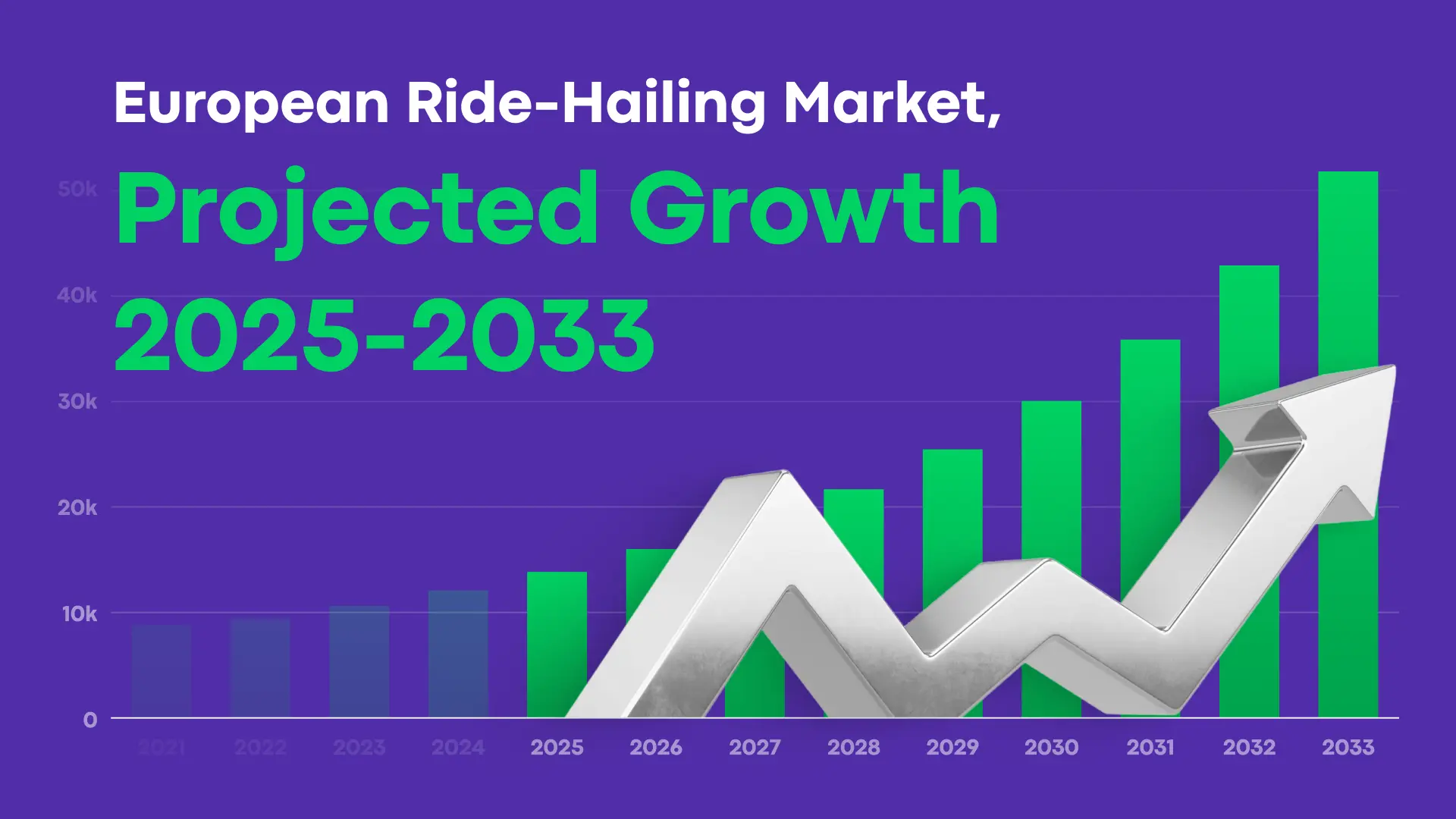 Learn about the key trends that are shaping taxi and ride-hailing across Europe right now, and get suggestions on how to adapt.
2026 European Mobility Report: Changes in the Taxi and Ride-Hailing Industry
-
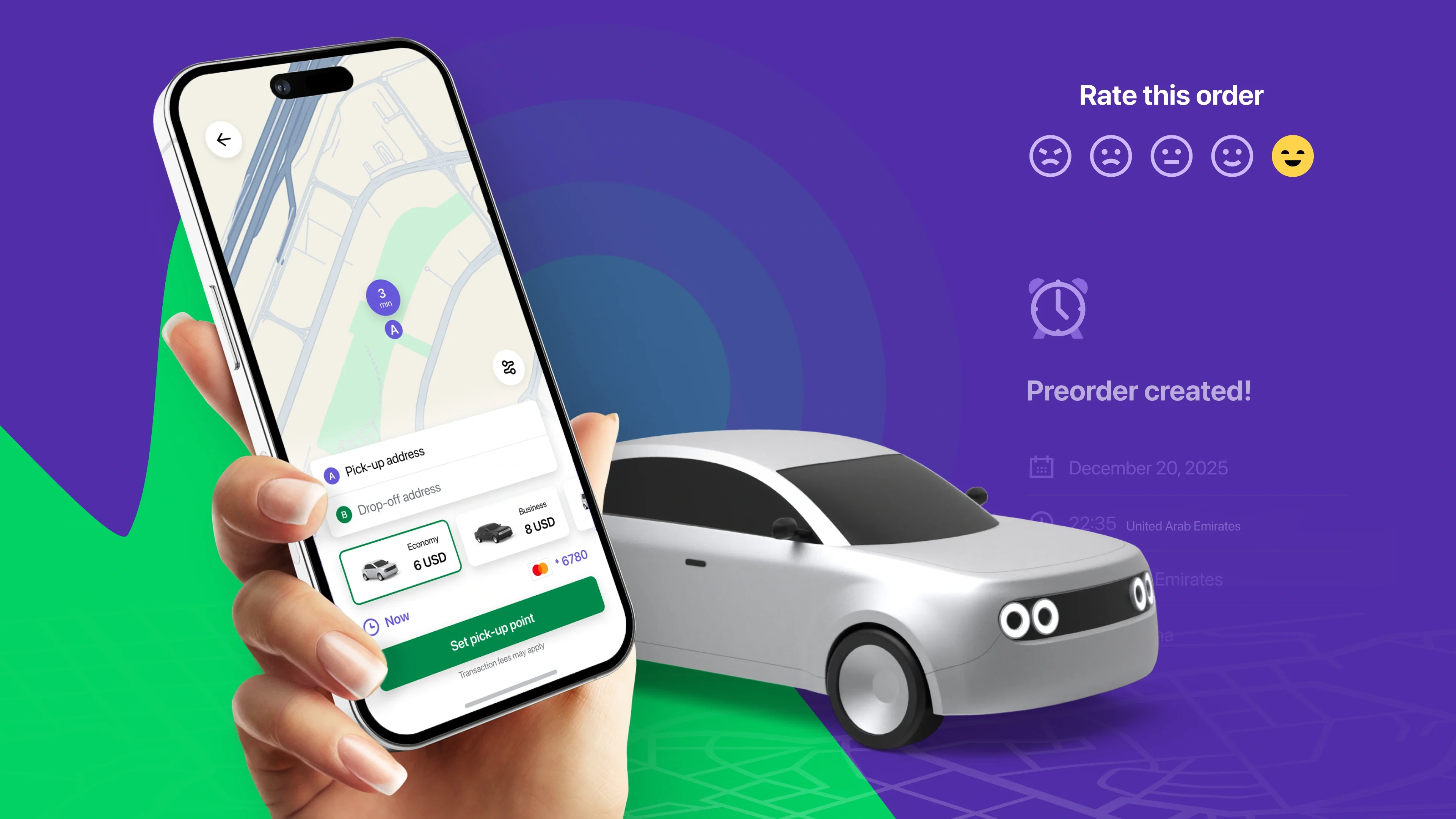 The global ride-hailing market continues to expand as passengers and drivers are looking to optimize their lifestyle and spend less time commuting. Modern technology platforms now power everything from local taxi fleets to large ride-hailing networks operating across multiple cities.
Top Ride-Hailing Platforms 2026: How to Choose the Right Solution for Your Mobility Business
-
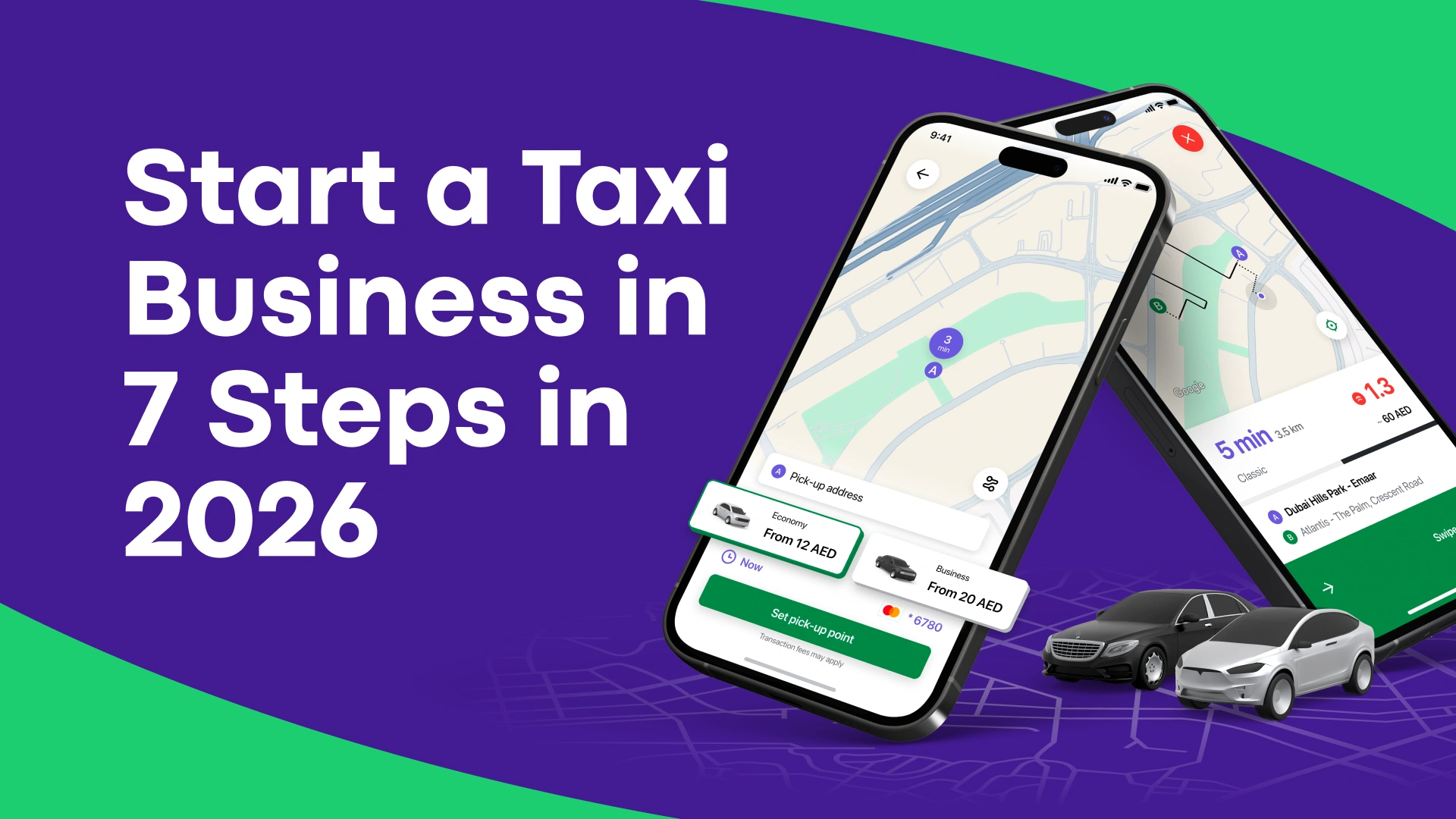 The taxi and ride-hailing industry continues to evolve rapidly, with strong growth expected through the decade. If you’re one of the entrepreneurs jumping on this opportunity, we’re here to support you.
Start a Taxi Business in 7 Steps in 2026
See your business in action
- Launch branded apps in 4 weeks on all App Stores
- Get full tech support from start to launch and beyond
- Increase your orders by up to 93%
Thank you for contacting us!
Check your inbox for an email from Onde