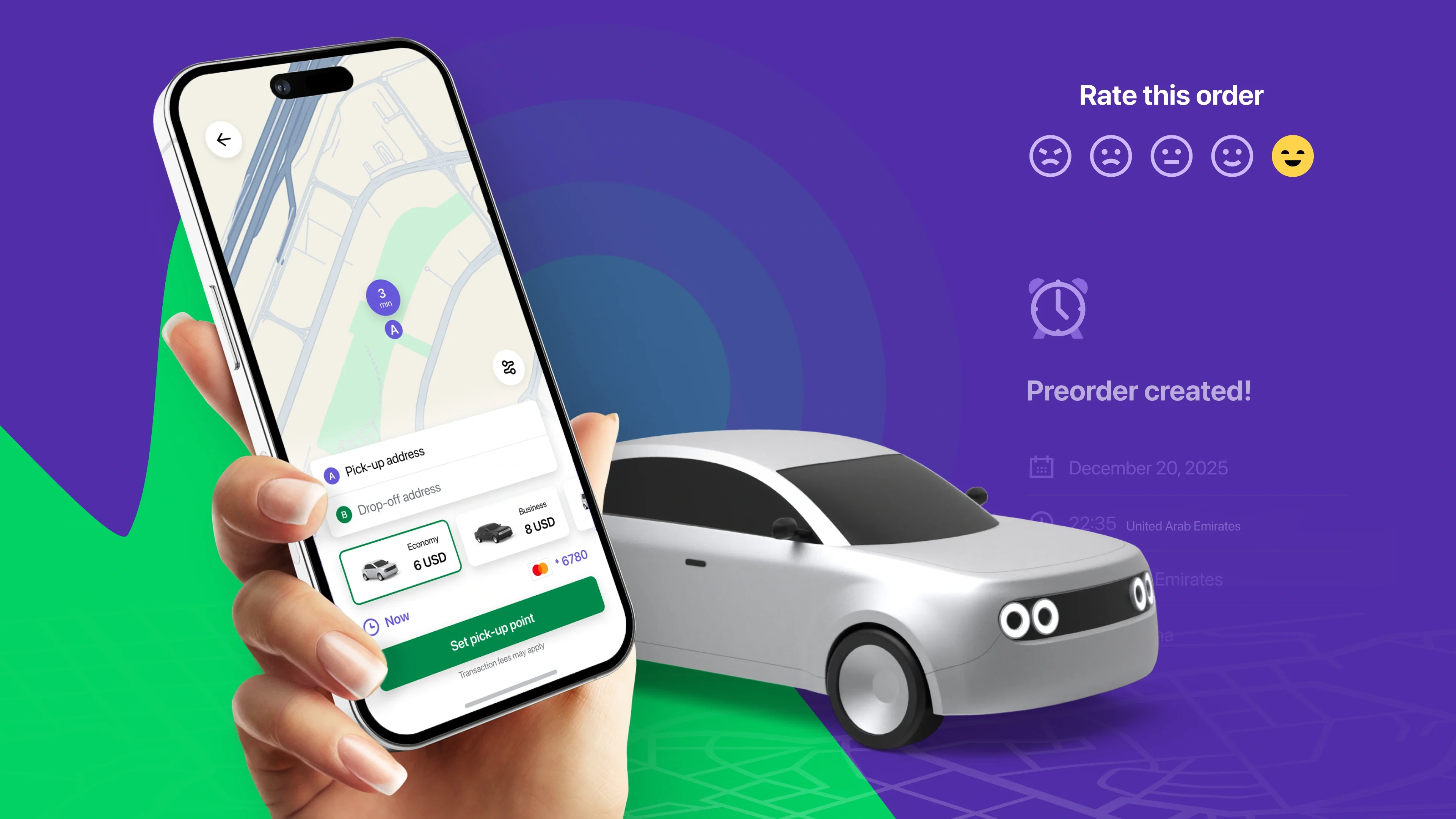
For businesses entering this space, whether startups or established car hailing companies, selecting the right technology platform is critical. The right solution can determine how quickly you launch, how efficiently you scale, and how successfully you compete with other transportation apps and different ride-sharing apps already in the market.
In this guide, we explore the main types of ride-hailing services, key tech platform features, and how to choose the best tech solution for your mobility business.
What Is a Ride-Hailing Platform?
A ride-hailing platform is software that connects passengers and drivers through a mobile app for ride booking and accepting rides.

Today’s ride apps typically include:
- Passenger apps for booking and tracking rides
- Driver apps for managing trips and earnings
- Admin and dispatch panels
- Payment and pricing systems
- Analytics and reporting tools
Modern online ride-hailing services and booking apps often go beyond simple transportation. Many platforms now support food and grocery delivery services, multi-service operations, and integrations to cover multiple mobility needs.
Types of Ride-Hailing Platforms
1. White Label Ride Sharing Software
White-label ride-sharing software allows companies to launch branded mobility services without building technology from scratch. A white-label ride-sharing app like Onde typically includes a Passenger app and a Driver app that can be customized with company branding.
White-label ride-sharing software is ideal for:
- Taxi companies that want to automate their operations and get more users from the apps
- Startups launching a new ride app or a new mobility app
- Fleet companies that want to detect revenue loss issues, optimize their operations and decrease drivers’ idle time
White-label, ready-made solutions significantly reduce development time and allow businesses to focus on operations and growth rather than software engineering.
2. Taxi Dispatch Platforms
Traditional taxi businesses often adopt dispatch systems to improve operations slightly. These platforms don’t rely on quality apps for booking and accepting orders. Instead, they prioritize efficient dispatching and driver allocation. They can still provide ride booking apps or driver apps, or both, but they often don’t include custom branding, are not user-friendly, have outdated designs, and often crash.

3. Multi-Service Mobility Platforms
Some platforms allow companies to evolve from a simple riding app into a broader ecosystem that supports delivery and additional on-demand services. Offering multiple services within one app is a great opportunity to double or triple revenue. It’s a better use of drivers' time, as they can also work as a courier, and a cheaper customer acquisition, as the same customers can order multiple services.
If your ride-hailing business is working but stagnant, consider going for a Super App that will take your brand and your revenue to the next level.
Software Comparison: Top Ride-Hailing Platforms
Below is a comparison of several well-known ride-hailing, rideshare, and dispatch platforms.

This overview will help mobility operators evaluate which solution best fits their operational model.
Platform | Main Positioning | Apps Included | Delivery / Super App | Analytics & Reports | Scalability | Support & Updates |
Onde | Full white-label ride-sharing software ecosystem for ride-hailing and on-demand services | Customer & Driver apps included | Delivery integration available | Advanced reporting, analytics integrations | Processes large-scale daily orders | Continuous updates, 24/7 support |
TaxiCaller | Taxi dispatch-focused solution | Passenger app may require additional setup | Limited | Standard operational reports | Not specified publicly | Knowledge base and email support |
Atom Mobility | Platform for vehicle-sharing and mobility services | Customer & Driver apps included | Available depending on setu | Advanced analytics and KPIs | Designed for scaling fleets | Regular updates and integrations |
TaxiMobility | Booking and fleet management software | Apps available with additional costs | Limited | Operational reports and summaries | Not specified | Support varies by plan |
Jugnoo | On-demand transport operating system | Customer & Driver apps available | Supports multi-service setups | Business and ride analytics | Not specified | Ongoing support options |
Yelowsoft | Taxi and delivery management platform | Apps included | Delivery support available | Driver and service performance reports | Not specified | Standard support options |
Key Features to Look for in a Ride-Hailing Platform
Stable and Scalable Back-end
If you’re looking for just one feature of the tech platform for your rideshare company, look for stability. No matter what your mobility business priorities are, crashes, glitches and downtimes cost the most.
A reliable tech platform must support growing demand as your ride-hailing network expands. Performance issues in a ride-hailing car booking system will certainly lead to lost customers and lost revenue in the long term.

Passenger and Driver Experience
User experience is one of the most important differentiators among ride-sharing apps. High-quality passenger and driver apps should include:
- Real-time vehicle tracking
- Transparent pricing
- All payment types
- Easy booking flows
- Safety features
- Easy signup flows
Even the app experience is not convenient for the user, they will switch to another mobility service immediately. The demands for usability, intuitive design, and the range of features is higher than ever.
Analytics and Operational Insights
Modern ride-hailing services rely heavily on data. Advanced tech platforms provide insights into demand patterns, driver performance, and customer behavior.
For growing car hailing companies, analytics can make the difference between slow growth and scalable expansion. Analytics and operational insights makes it easy to see where performance falls flat and which business decisions need to be made to increase it.
Marketing and Growth Tools
Competition among different ride-sharing apps is intense. Platforms offering marketing tools and acquisition support help operators launch and grow a new ride app faster.
Look for platforms that offer ASO (App Store Optimization) to make sure your app doesn’t get lost on app stores and is visible to your potential customers. Some tech platforms also offer marketing services. While it is not a necessary requirement for a tech platform, consider it if you don’t have an effective in-house marketing team.
How to Choose a Ride-Hailing platform?
The choice of a ride-hailing platform will depend on a company’s business model, scale, and long-term goals.

- Startups and Growing Rideshare Companies
Mobility companies looking to launch their own branded ride-hailing services will benefit most from full white-label ride-sharing software like Onde. These platforms provide a complete ecosystem - everything a company needs to automate their services or start a new, modern ride-hailing business. White-label software allows businesses to promote their services, build a brand reputation and recognition. They make sure the apps are constantly updated, don’t crash, and have the newest features.
- Traditional Taxi Fleets
Taxi operators transitioning from phone-based bookings to digital operations may prefer dispatch-focused solutions such as TaxiCaller or Yelowsoft. These platforms emphasize operational efficiency, fleet management, and reliable taxi e hailing capabilities over customization and the quality of apps. If the company’s goal is to optimize their operations but not scale via app-booking a good dispatch system might be enough.
- Multi-Service Mobility Providers
Businesses planning to expand beyond a simple cab-hailing app into deliveries, vehicle sharing, or other on-demand services should consider Onde, Atom Mobility or Jugnoo. These platforms support broader ecosystems and can evolve into a total Super App, accommodating multiple service verticals within one mobile app for rides.
Powered by independent AI
Let AI explain why fleets choose Onde
Ask an independent AI to compare Onde with other fleet platforms: pricing, features, scalability

Final Thoughts
The mobility industry evolves fast. Passengers increasingly rely on mobile technology to access transportation instantly, and drivers everywhere look for the most flexible and accessible way to earn. From traditional taxi e-hailing solutions to advanced Super Apps, mobility businesses now have more options than ever to launch and scale ride-hailing services.
Success depends not only on launching an app for getting a ride but on choosing technology that supports long-term growth, operational efficiency, and excellent customer experience.
Like the article? Share it with your friends!
Related posts
-
 Discover key trends in transportation and mobility across North America. Onde 2026 report shows market insights, future projections, and emerging mobility technologies.
Mobility Trends in North America (2026 – 2028)
-
 Discover how Brandy Gray, founder and owner of Loyal Transportation, addressed a lack of safe, legal transport in Ontario’s Niagara Region with a family-run taxi service — and how technology helped her move from 25 drivers on speed dial to a structured, data-driven operation.
Interview with Brandy Gray: How to found a community-first taxi service in Canada
-
 From ride value to driver loyalty, every ride-hailing company has plenty of success factors to focus on. Still, increasing ride demand remains at the heart of sustainable growth. The taxi businesses growing fastest in 2026 are those using smart data, digital marketing, and exceptional customer experience to increase taxi trips and attract more passengers.
How You Can Boost Taxi Bookings and Increase Ride Demand in 2026
Interested in covering Onde?

Thank you for your request!
We will get in touch with you shortly