
Saudi Arabia has a crowded ride-hailing market: the stakes are high, the competition is fierce. There is a right app for everyone: visitors, residents, and people travelling outside the big cities. For someone launching a new ride-hailing or mobility app, it’s useful to know what they are facing.
Our list covers six apps: Uber, Careem, Jeeny, Kaiian, Bolt, and inDrive. All six are popular in Saudi Arabia and used in multiple cities. Some are global giants, like Uber, and others, like Kaiian, are local ride-hailing services. There are also Super Apps: apps that cover taxi services, delivery services, and sometimes even payment systems.
Uber
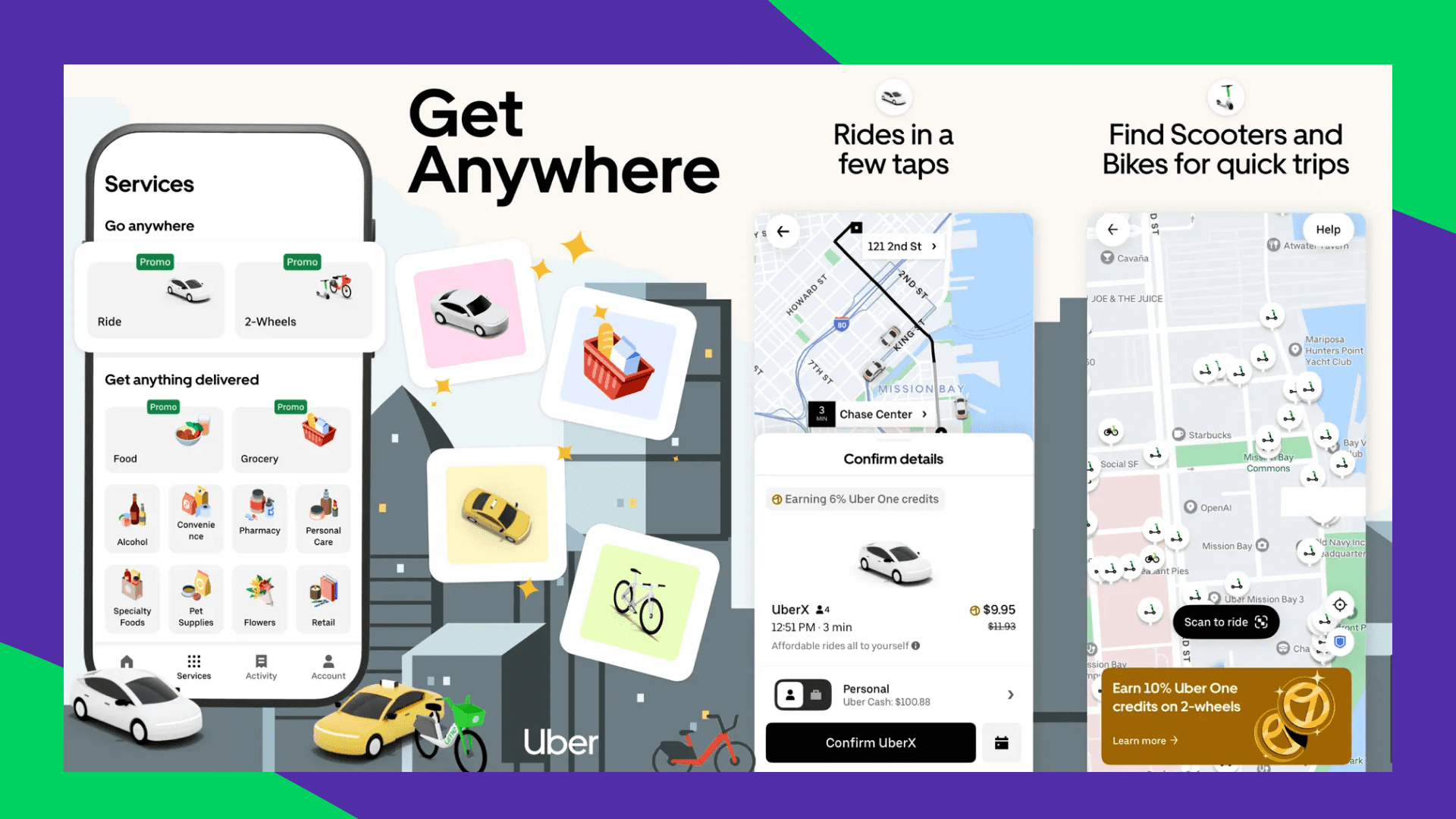
Uber has operated in Saudi Arabia since 2014. In 2016, Saudi Arabia's Public Investment Fund put $3.5 billion into Uber, which allowed the company to beat competitors, launch in Saudi Arabia, and become the most popular app despite social media backlash and other controversies.
Today, Uber offers a wide range of ride tiers. These include UberX, XL (for large groups), Saver, Comfort, Black, Share (for shared rides), and Uber Teens.
In 2023, Uber partnered with Saudi Arabian Railways (SAR) to introduce its first-ever Uber Reserve integration, which allowed riders to book their Uber trip alongside their train ticket.
Travel site Bento calls Uber the easiest ride app for most visitors. It has broad Saudi city coverage and an account that usually works across borders. In 2024, Uber already had over a million users in the country. Today, the numbers are higher, but Uber doesn’t disclose them officially.
Women make up more than 70% to 80% of Uber's rider base in Saudi Arabia, using the platform for daily transit, work, and education. In 2019, Uber launched “Women Preferred View” for women drivers in Saudi Arabia. The feature allows them to choose to receive ride requests from women passengers, giving them greater control over their driving preferences while supporting flexible earning opportunities. Since then, Uber has introduced similar functionality in several other markets worldwide.
An average, standard UberX ride within major Saudi Arabian cities typically costs between SAR 25 and SAR 50 ($6.60 to $13.30 USD) for typical 10-to-20-minute intra-city trips.
Careem
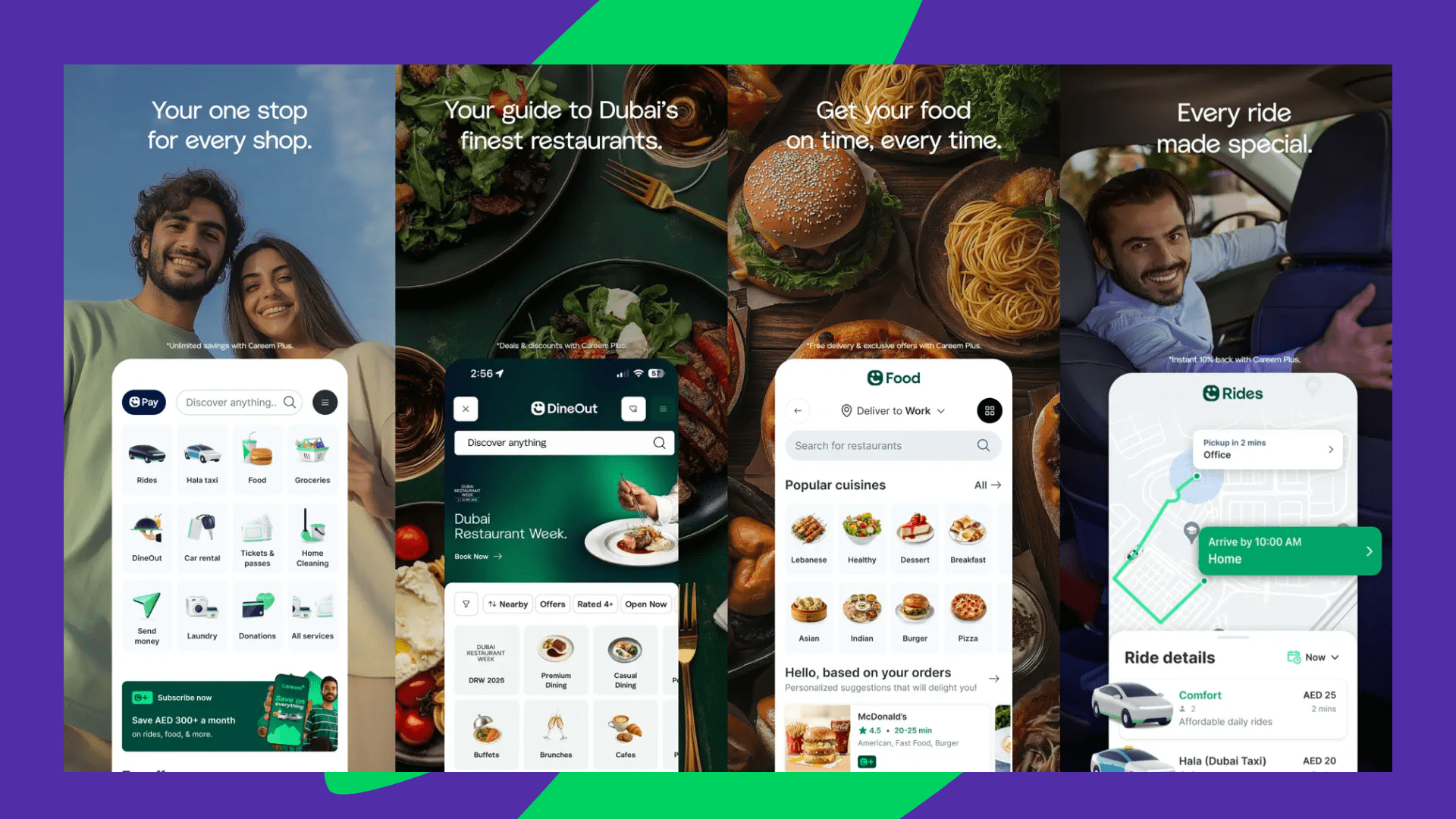
Careem launched in Dubai in 2012 and was among the first car-hailing companies in Saudi Arabia to receive a transport ministry licence in May 2016. Uber announced its acquisition of Careem for $3.1 billion in 2019, with Careem keeping its own name and app.
Careem is a Super App. Food delivery, groceries, and Careem Pay are built in, and it operates in all cities, not just Riyadh and Jeddah.
Bento's comparison page describes it as a major Saudi ride app with city, airport, and some intercity options, with vehicle types that can differ from Uber. The same guide gives Careem GO base fares of about SAR 5–9 and distance rates of roughly SAR 1.0–2.0 per km.
In May 2026, Careem began winding down most of its consumer services in Saudi Arabia, roughly 13 months after expanding its grocery business in Riyadh. According to FWDstart, Rides and Bikes are the main services remaining, while food, grocery and other consumer services appear to be disappearing from the Saudi app. Careem had not formally announced the broader withdrawal at the time of publication.
Kaiian
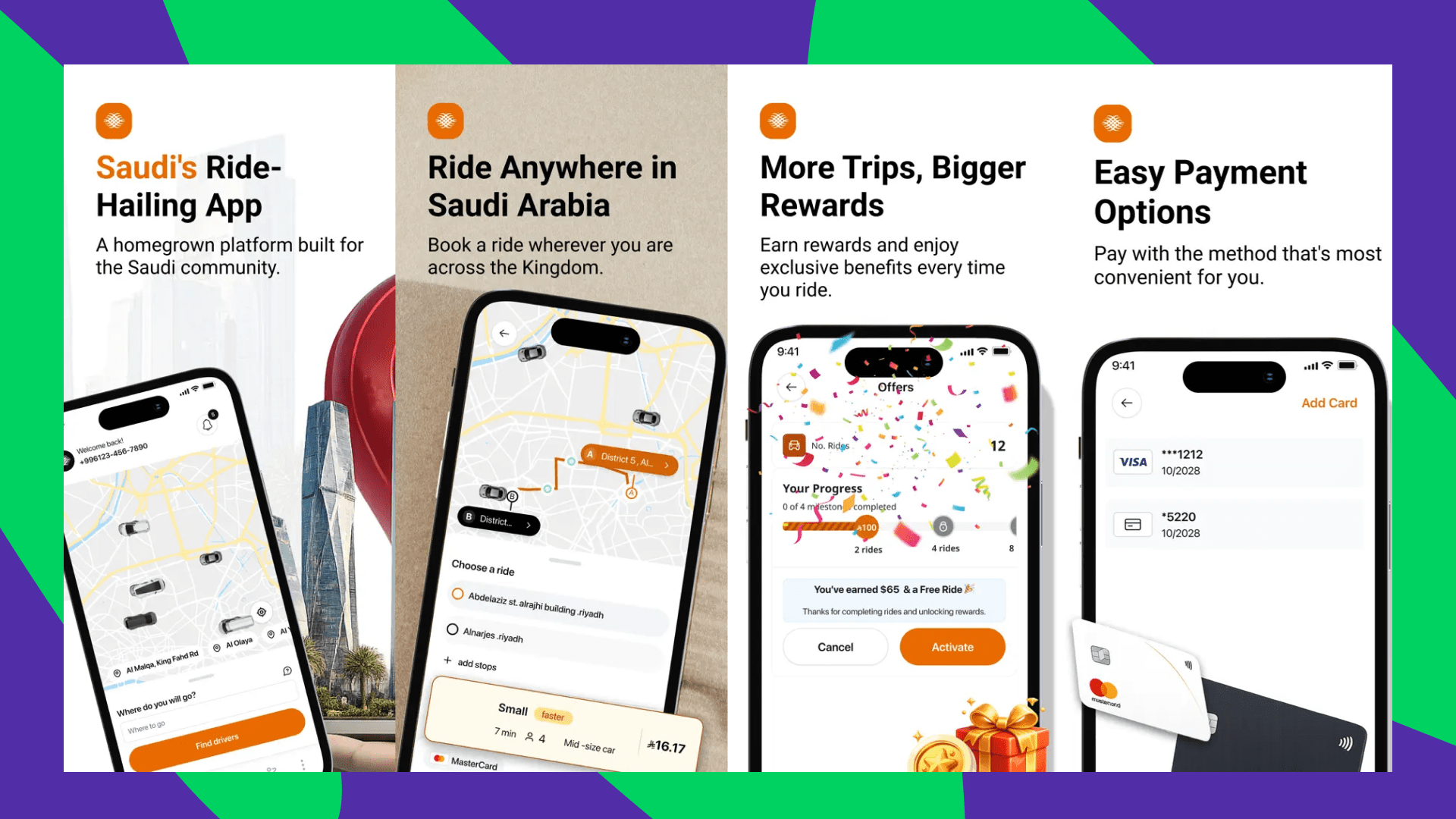
Kaiian, a local Saudi Arabian ride-hailing app, launched in 2016 when Uber and Careem were already operating in Saudi Arabia.
As a local taxi company without the budget of Uber, Kaiian launched with an Onde white-label app, fully customised with its own logo, colours, and branding. The Driver app and Customer app matched riders to nearby drivers using GPS, showed a price estimate, and let you track the car in real time.
Kaiian's strongest point is geography. It started in small towns before moving to bigger cities, and now it operates in 60+ towns across Saudi Arabia. Bento says the app covers places beyond the main international-app corridors. The App Store listing names smaller locations such as Tabuk, Hafar Al-Batin, Najran, Arar and Rafha.
Despite serious competition, Kaiian is an established taxi service that couldn’t be bullied into leaving the market. In his interview, the founder Bader Al-Arjani points out that the ambition was not simply to survive as a niche player but eventually to take a significant share of the market, which the company succeeded in.
Bader Al-Arjani also argues that a startup doesn't necessarily need a CTO or its own technology from day one. The Onde technology helped Kaiian become what it is. Its Driver app has a 4.6 out of 5 rating from 4.1K ratings on the App Store, and Sensor Tower data shows a gradual increase in Kaiian downloads in 2025, beginning at 10.6K and rising to 12.5K. Active user numbers rose steadily, reaching a high of 222K in late February 2025 before stabilizing around 202K.
Jeeny
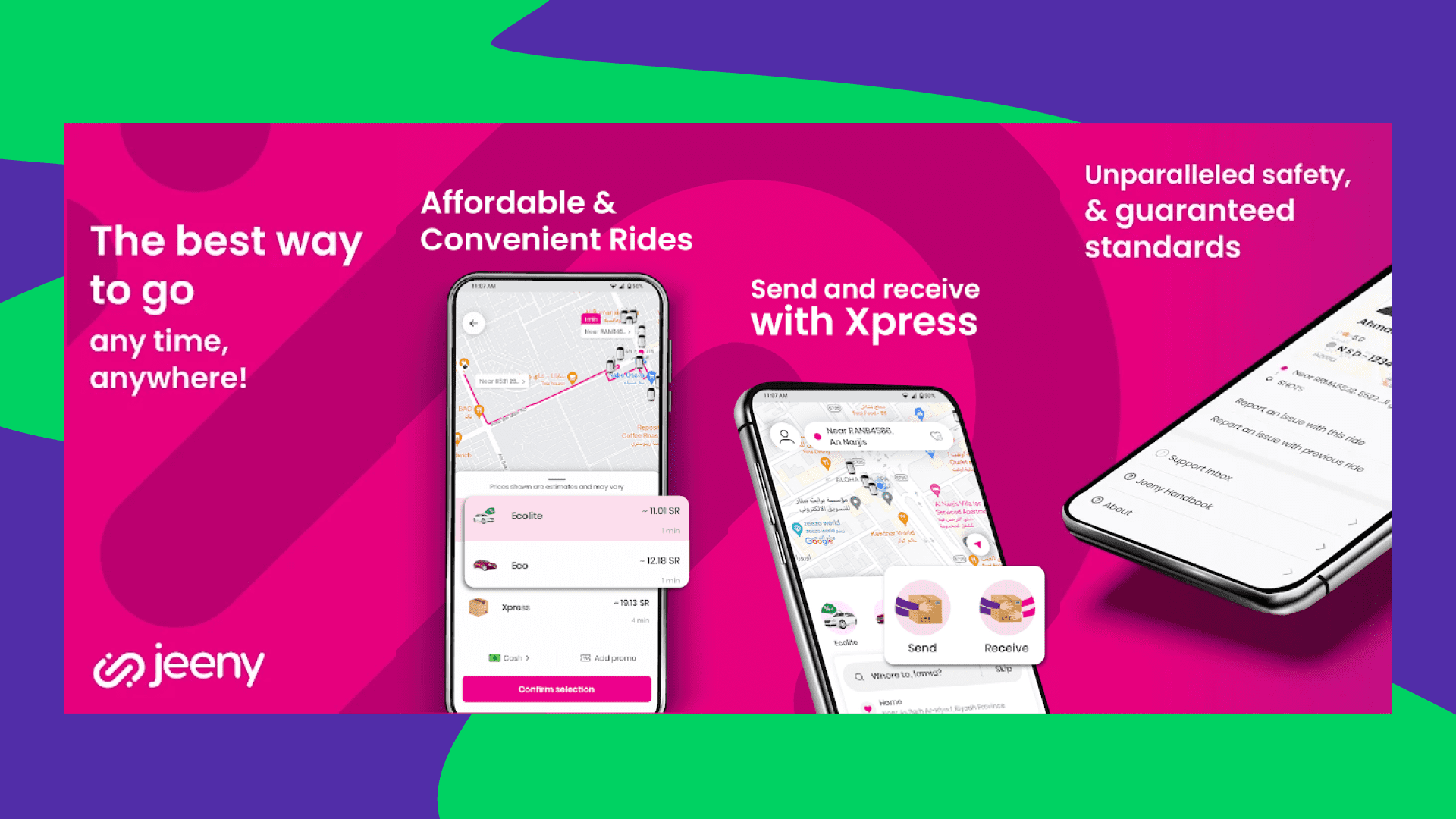
Jeeny is one of the oldest mobile service players. It entered Saudi Arabia in late 2013 as Easy Taxi and rebranded as Jeeny in early 2018. Now, Jeeny has expanded beyond rides, becoming an on-demand service. Its product list includes app-booked traditional taxis, a lower-cost EcoLite tier, and a Bookme-powered travel integration for flights, hotels, and intercity transport launched in May 2026. The company also offers Jeeny Elite for a more luxurious ride-hailing tier.
Bento calls it a popular alternative that can be cheaper than Uber or Careem in Jeddah, Makkah, Madinah, and other cities. However, it warns that many foreign numbers cannot register.
Sensor Tower data shows that Jeeny displayed a consistent download pattern in Q1 of 2025, with numbers ranging from 19.3K to 31.1K. Active users peaked at 589K in late February, though figures later settled around 426K by the quarter's close.
Bolt
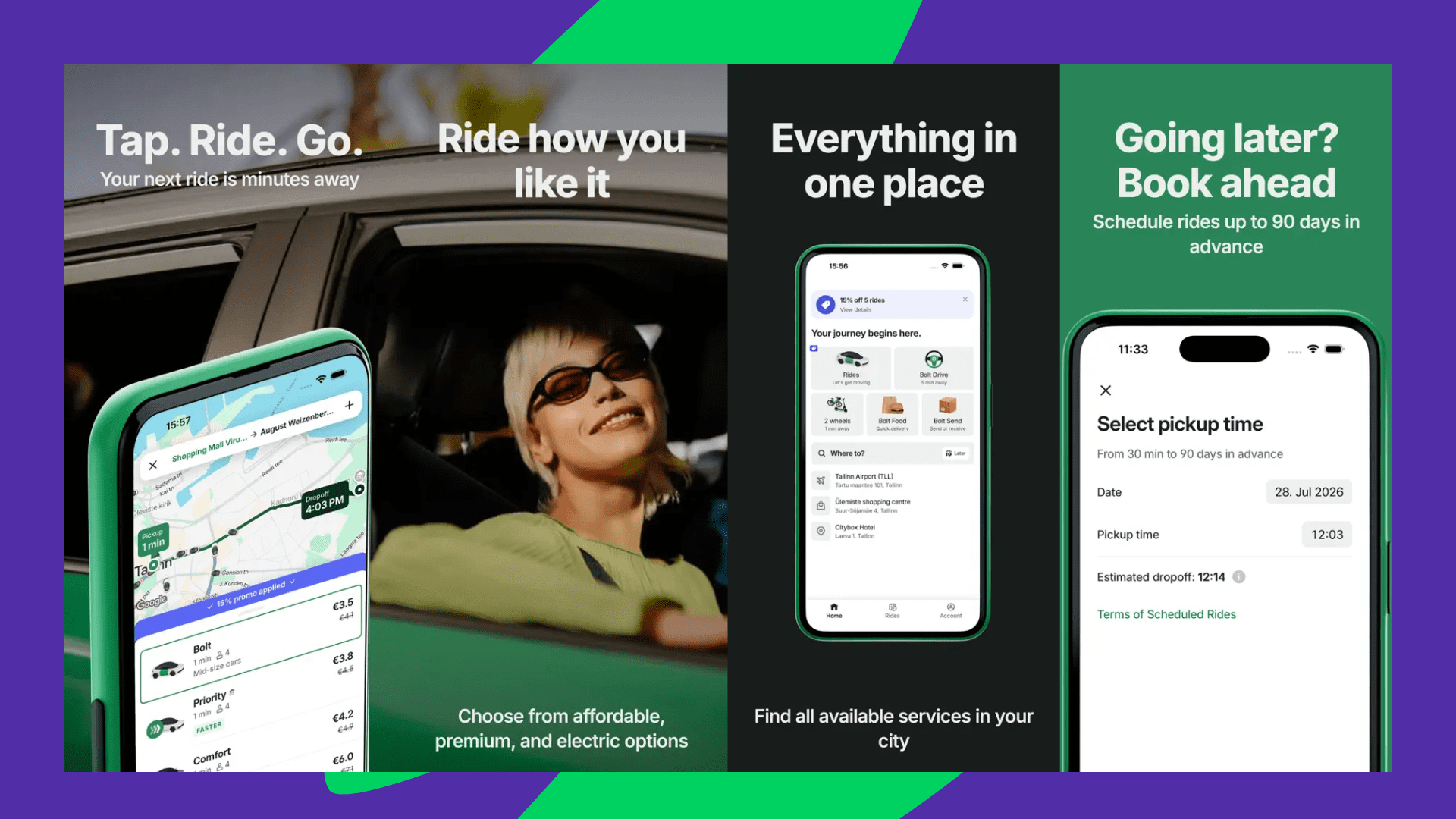
Bolt was a newer entrant than Uber or Careem, entering the Saudi Arabian market in 2017. However, the service grew tenfold over three years leading up to 2024, driven by the Kingdom's rising tourism and urban entertainment sectors. Bolt focused on working with the Saudi government to ensure better transportation for citizens, and at the same time, the company was there to serve tourists. In Arab news, Martin Villig, co-founder of Bolt, highlighted that there are more than 27 million foreign tourists who visited Saudi Arabia in 2023, and most of them will require ride-hailing services.
In Saudi Arabia, Bolt expanded steadily across major cities, including Riyadh, Jeddah, and Dammam. Rather than introducing major new services in Saudi Arabia, Bolt's expanded its core ride-hailing service, participating in major events such as the Riyadh Season 2022, where Bolt served as a mobility partner for the event.
The company also positions itself as a contributor to Vision 2030, particularly its goals around smart cities, sustainable transport, and reducing dependence on private cars.
inDrive
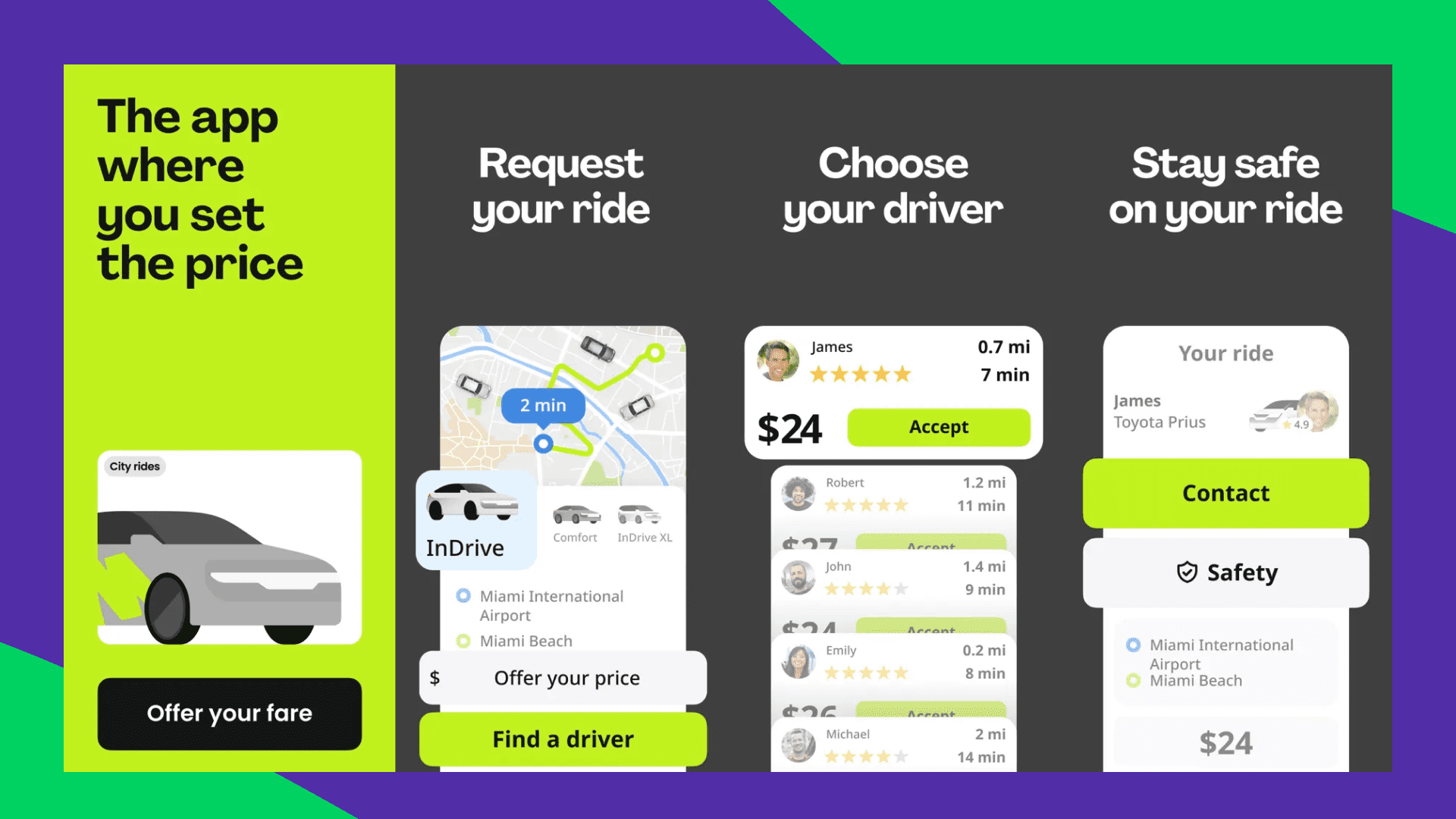
inDrive is the newest ride-hailing service on this list, and its idea differs slightly from other ride-hailing services mentioned above. The company obtained its licence to operate in Saudi Arabia in April 2025, ran a test launch in Jeddah, and officially launched in Riyadh on September 23, 2025, Saudi National Day.
inDrive’s distinguishing feature is pricing. Riders propose a fare, and drivers can accept, decline, or counter. The company also cites driver verification, ride tracking, and 24/7 customer support.
Sensor Tower names inDrive as the world's second most-downloaded ride-hailing app, mostly due to negotiated features and new concepts. At launch, drivers also paid no commission at first, which the company said would allow lower ride prices.
What This Means for Anyone Launching in Saudi Arabia
The Saudi ride-hailing market is crowded, but it is not closed. The six apps above show that there are several ways to win, and each one carries a lesson for a new entrant.
Global scale is hard to beat head-on.
Uber has operated in the Kingdom since 2014, has backing from the Public Investment Fund, and has the broadest range of ride tiers and the largest user base, with women making up a large share of its riders. Competing with it on coverage or brand recognition is unrealistic. Careem's May 2026 retreat from most consumer services shows that even a well-established Super App can struggle to hold a broad offering together in this market.
Local focus is a real opening.
Kaiian grew by serving small towns that the international apps largely ignored, and it now operates in 60+ towns. Jeeny built a loyal base by being cheaper and by adding tiers and travel integrations. Cities outside Riyadh and Jeddah, and customers the big apps underserve, remain the clearest gap.
A new pricing model can break through.
inDrive launched in 2025 with rider-set fares and no driver commission at first, and its quick rise shows that riders and drivers will try a new approach if it saves them money or gives them more control.
You do not need heavy technology to begin.
Kaiian launched on a white-label platform and put its effort into driver recruitment and local presence. A ready-made solution can get you to market faster and cheaper, and you can invest in your own technology once demand is proven.
Practical priorities for a new entrant:
Pick a niche: a region, a rider group (women, tourists, families), or a service type, rather than a general offering.
Take safety and trust seriously: driver verification, ride tracking, and women-focused features matter in this market.
Use the market's growth drivers: tourism, major events, and Vision 2030 goals around smart cities and sustainable transport create openings for partnerships.
Secure your licence and compliance early: inDrive's path from licence to test launch to full launch shows how much time regulatory approval and a phased rollout can take.
Plan for local conditions: registration problems for foreign phone numbers, for instance, are a gap a new app can solve.
Saudi Arabia's demand for mobility is growing, and the market is large enough for newcomers. The ones that succeed will probably not copy Uber. They will find a specific group of riders or drivers that the existing apps serve poorly and build the service around them.
Powered by independent AI
Ask AI to compare Onde with other platforms
Ask an independent AI to compare Onde with other fleet platforms: pricing, features, scalability

Like the article? Share it with your friends!
Related posts
-
 Here go the best 10 strategies for your taxi company to grow and attract new loyal customers. Give them a try, no matter if you just launched your taxi mobile app or already provide ride-hailing services for some time. You will be pleasantly surprised by how easy it is to attract customer attention! 😎
How to attract customers: 10 strategies
-
 Creating an app like Uber requires more than just the idea and the driving experience. You need to know which features your apps should definitely have and which features help Uber stand out. All of that you can find in our new article.
10+ must-have features to create an app like Uber
-
 Entering a ride-hailing market that already has established players isn't easy. However, we are confident that you can still get your share of the market - if you do your research and learn from it. In this article, we go through plenty of the things you can do to make sure you understand and outperform your competitors.
3 steps to outperforming established competitors in 2024