
Saudi Arabia's ride-hailing market might be competitive, but it still offers opportunities for established taxi companies and entrepreneurs launching new mobility businesses. To start their ride-hailing business or automate an existing taxi business, founders need at least:
- an effective dispatch platform to automate operations
- passenger and driver apps in app stores to turn ordering a taxi into a habit and benefit from app gamification and marketing
- convenient payment options to get all kinds of users
- stable, reliable technology that can support growth as demand increases
Sounds simple enough, right? We also think so. Choosing the right taxi dispatch software, however, can get more complicated.
Quick comparison: Top taxi dispatch software for Saudi Arabia
| Platform | What is it? | Option to add delivery | Localization | Your branding | Integration with TGA |
|---|---|---|---|---|---|
| Onde | Ready-made dispatch platform & set of Uber-like apps for web and mobile | + | 70+ languages, native Arabic RTL typography | Yes, for your Passenger and Driver apps (free of charge) | + |
| Apptunix | A taxi app development company that builds custom ride-hailing solutions, including passenger and driver apps, dispatch systems, and admin panels. | + | Not specified for its taxi platform. | Yes, for your Passenger and Driver apps (as part of taxi app development) | Not verified |
| ATOM Mobility | Mobile apps for vehicle-sharing, ride-hailing, or car rental business | - | 50 languages | Available depending on the plan | via API integration |
| TaxiCaller | A taxi dispatch system with booking web forms, passenger and driver apps | - | 4 languages (English, Spanish, Swedish, Finnish) | Passenger app (at extra cost) | via API integration |
| Jugnoo | A no-code platform that offers to build various types of mobility software. | + | 9 languages | at extra cost | Not verified |
Powered by independent AI
Ask AI why Onde is the best choice for you

What should Saudi taxi businesses look for in dispatch software?
Before comparing vendors, define what your business needs to achieve. A traditional taxi operator replacing phone-based dispatch has different priorities from an entrepreneur launching a new ride-hailing brand in Riyadh or Jeddah.
Several factors deserve particular attention in Saudi Arabia.
1. Arabic and English passenger experiences
Saudi Arabia's customer base includes Arabic-speaking residents, international residents, business travelers, and visitors. A localized booking experience can make it easier for different groups to use your service.
Look for taxi booking software that supports Arabic and English across the passenger app, driver app, and relevant booking interfaces. Ask vendors to demonstrate Arabic layouts, including right-to-left text, rather than simply confirming that translations are available.
2. Convenient digital payments
Digital payments are an important consideration for a Saudi ride-hailing business. According to the Saudi Central Bank (SAMA), electronic payments accounted for 79% of retail payments in 2024, up from 70% in 2023. SAMA's announcement highlights the rapid growth of non-cash transactions.
Your taxi dispatch system should therefore support a payment experience suited to the local market. Your software should allow cash payments, card payments, and digital wallets made possible by integrations with local payment providers. Confirm whether the mobility provider supports the specific payment methods you need and whether integration requires extra fees or development.
Cash might seem like a redundant measure - yet, it’s very important! Cash remains a necessary option for many passengers in Saudi Arabia.
3. Passenger safety, privacy, and trust
Passengers need to feel confident about who is picking them up, where the trip is going, and how their information is handled.
A Saudi Arabia-specific economic impact report published by Uber identifies privacy, safety, and comfort as important considerations among surveyed Uber riders. Although this research concerns Uber users rather than every Saudi passenger, it offers useful context for local operators.
When evaluating taxi dispatch software, look for features such as:
- Driver and vehicle information displayed before pickup
- Live trip tracking and the ability to share trip details
- Emergency assistance features, where available and appropriately integrated
- Clear pickup and drop-off details
- Passenger and driver ratings
Also ask vendors how they protect personal data, control access to operational information, and support applicable Saudi data protection requirements.
4. Reliable dispatch and accurate pickup information
In busy urban areas, poor dispatch can lead to long pickup times, driver cancellations, and lost bookings. A strong system should help operators assign rides efficiently and monitor the fleet in real time.
Useful capabilities include automatic driver assignment, manual dispatch, live vehicle tracking, fare estimation, scheduled rides, and tools for handling bookings made by phone or through other channels.
For airport transfers, hotels, corporate accounts, and trips outside city centers, scheduled booking and reliable pickup coordination may be especially valuable.
5. Room to grow beyond a basic taxi service
A new operator may start with a small fleet in one city, while an established company may want to expand into other cities, serve corporate clients, or introduce additional services.
Check whether the platform can support more drivers, higher booking volumes, additional service categories, and multiple booking channels without requiring a complete technology rebuild.
For a new business, also consider the time and resources needed to launch. Ready-made white-label taxi software can usually reduce development work compared with building every component from scratch.
6. Saudi licensing and regulatory readiness
Software alone does not make a taxi or ride-hailing business legally ready to operate. The business model, transport activity, vehicles, drivers, and any applicable platform or intermediary activities may be subject to requirements from the Transport General Authority (TGA) and other Saudi authorities.
Review the relevant TGA regulations before launch. Ask each vendor which regulatory integrations it supports, whether they are available in Saudi Arabia, and whether any additional implementation work is required.
Onde: Taxi dispatch software built for growth
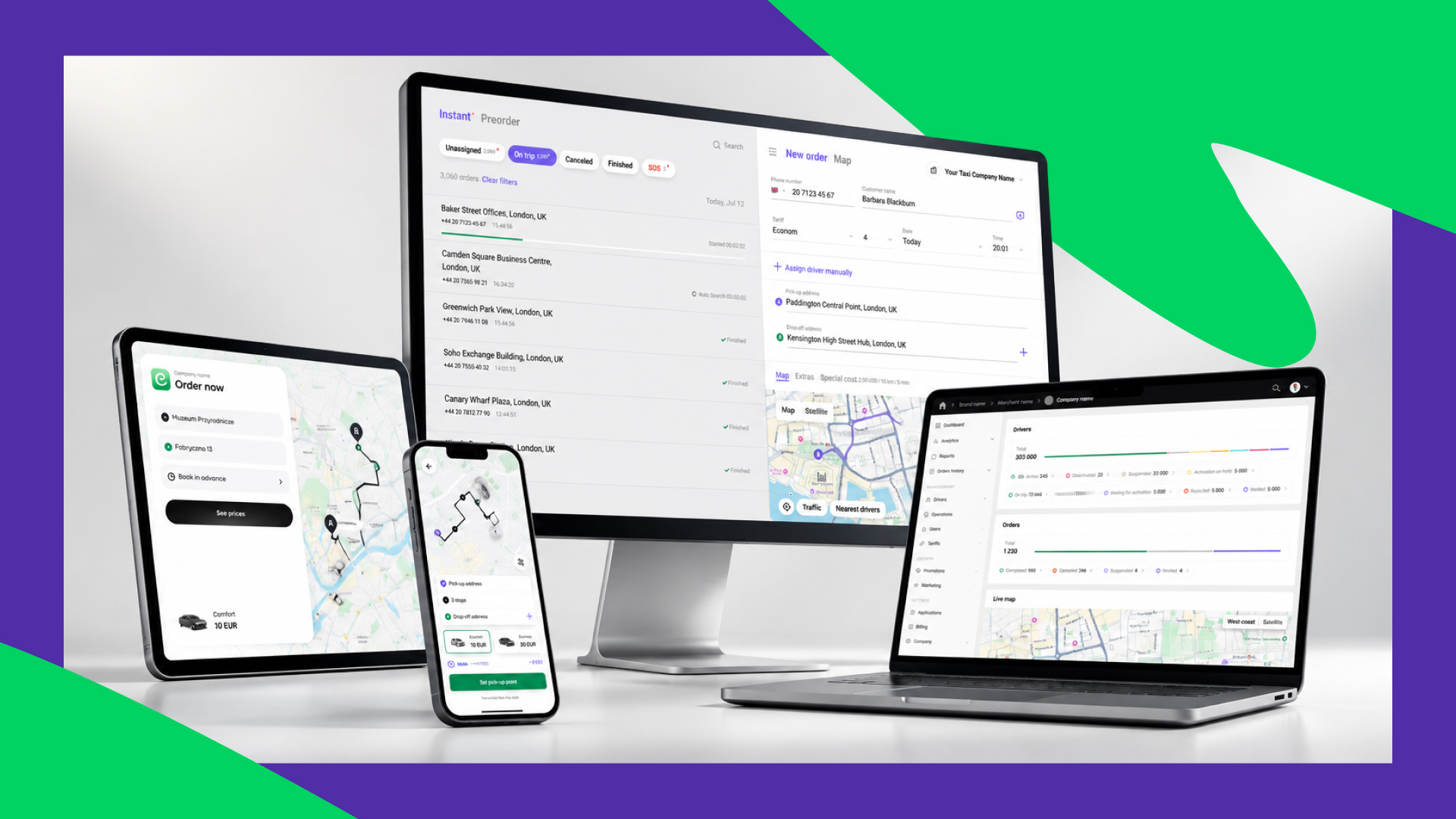
Best for: Established taxi companies modernizing their operations, entrepreneurs launching a branded ride-hailing service, and mobility businesses planning to expand their customer base and add more service types in the future.
Onde is a white-label mobility platform that gives operators their own branded passenger and driver apps, a dispatch system, web booking options, and an administration platform. Instead of building and maintaining a complete taxi technology stack in-house, a business can use Onde's existing software and focus on operating and growing its service.
Key features
- Branded passenger and driver apps: Launch apps for iOS and Android under your company's identity.
- Automated dispatch: Assign rides to drivers and manage bookings through an operator interface.
- Web booking: Accept bookings through a browser, including from passengers who prefer not to install an app.
- Operational analytics: Monitor performance and use business data to identify operational issues and growth opportunities.
- Payments and integrations: Connect supported payment providers and other business systems.
- Safety features: SOS buttons, Share my Ride, Customer and Driver ratings
- Marketing support: Launch to app store and basic App Store Optimization is included in every plan. Additional marketing services to help attract and retain passengers come at extra cost.
- Expansion options: Add service types such as deliveries or build a broader mobility offering as the business develops.
- Scalability: the platform supports unlimited drivers and fleets across its plans, and the company reports processing up to 2 million orders daily with 99.98% uptime.
Pricing model: One-time fee, then flexible monthly fee OR revenue share with no fleet size limits.
Apptunix: Customizable taxi app development
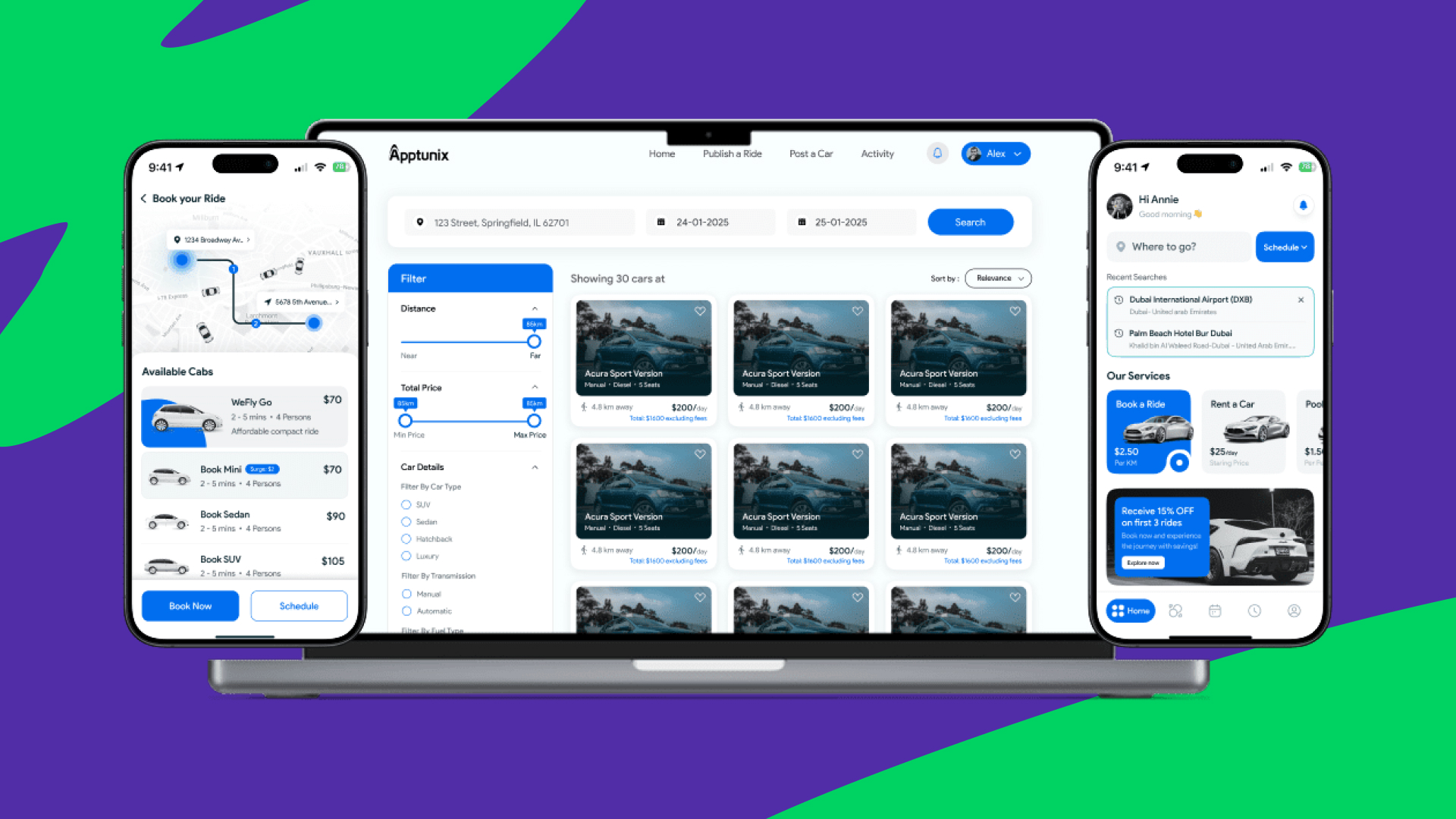 Best for: Entrepreneurs and established transport businesses that want a branded taxi app and may need a solution tailored to specific business requirements.
Apptunix provides taxi app development services and promotes ready-to-launch white-label solutions. Its offering focuses on helping businesses create their own taxi booking experience, with features and workflows selected according to the project.
Key features
Apptunix describes capabilities that include:
- White-label taxi apps with custom branding
- Passenger and driver applications
- Automated ride assignment and dispatch
- Route optimization and dynamic pricing features
- Support for multiple languages and currencies
- Customization for different business models and requirements
Note: The availability of particular features and the amount of customization required should be confirmed in a project proposal.
Pricing model: Apptunix provides project-based pricing through consultation rather than a single publicly listed price applicable to every taxi business.
ATOM Mobility: Ride-hailing and shared mobility software
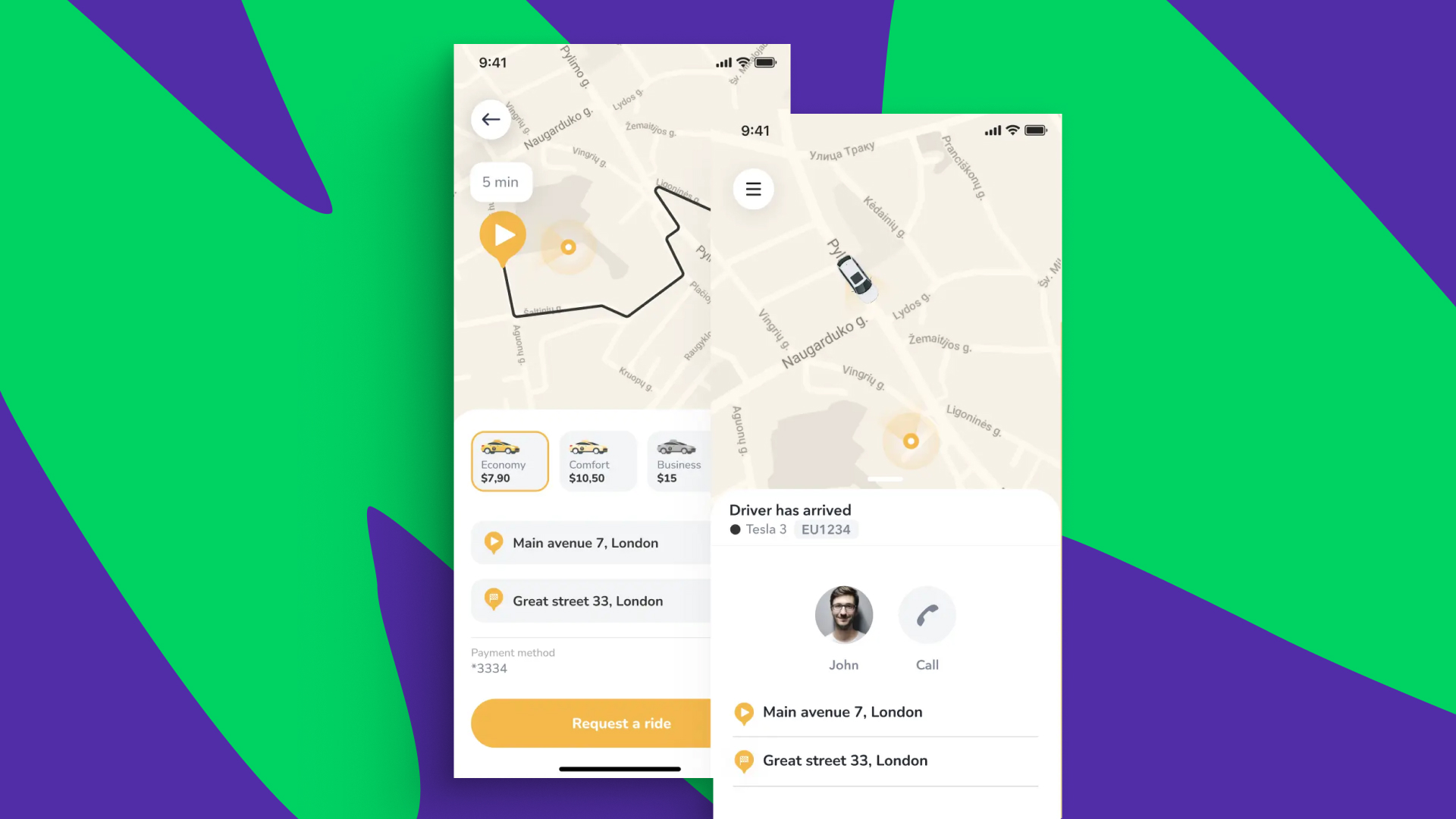
Best for: Startups and operators exploring ride-hailing alongside vehicle rental, sharing, or other mobility services.
ATOM Mobility provides white-label software for ride-hailing, vehicle sharing, and digital rental businesses. Its platform supports configurable booking experiences and different service models, making it relevant to companies exploring more than traditional taxi dispatch.
Key features
Depending on the selected plan, ATOM Mobility offers:
- White-label passenger apps for iOS and Android.
- An operations dashboard.
- Scheduled and on-demand rides.
- Configurable pricing, including an offer-your-price feature for ride-hailing.
- Multi-language and multi-currency support.
- Integrations and API access on applicable plans.
- Additional operational capabilities for selected mobility use cases.
The precise features included depend on the plan and business model. In particular, confirm which driver and operator tools are included in the configuration you intend to buy.
TaxiCaller: Cloud-based dispatch for professional taxi fleets
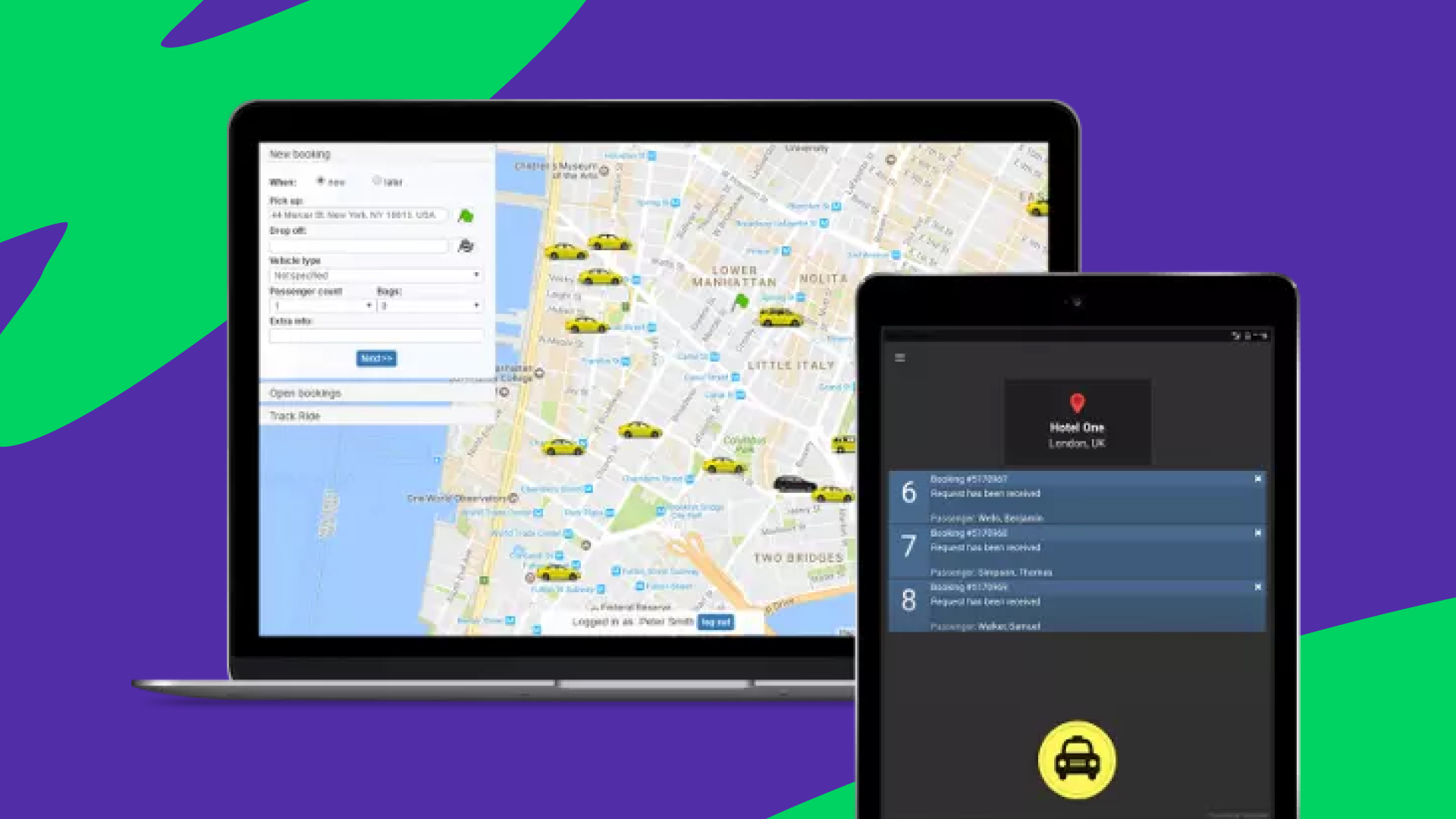
Best for: Traditional taxi companies that want to digitize bookings, improve driver allocation, and manage fleet operations through a cloud-based system.
TaxiCaller focuses on taxi dispatch and fleet management. Its platform brings bookings, dispatchers, drivers, and vehicle information into one operational system. It can be particularly relevant to companies transitioning from phone-based or manual dispatch.
Key features
TaxiCaller's public product information includes:
- Cloud-based dispatch console
- Automated and manual dispatch
- Real-time vehicle tracking
- Driver and passenger apps
- Web booking and corporate booking tools
- Fare estimation, tariffs, and reporting
- Phone-system integrations and API options
- Additional modules for specialized transportation services
Pricing model: TaxiCaller's standard taxi solution uses a per-vehicle monthly subscription.
Jugnoo: Taxi apps and multi-service software
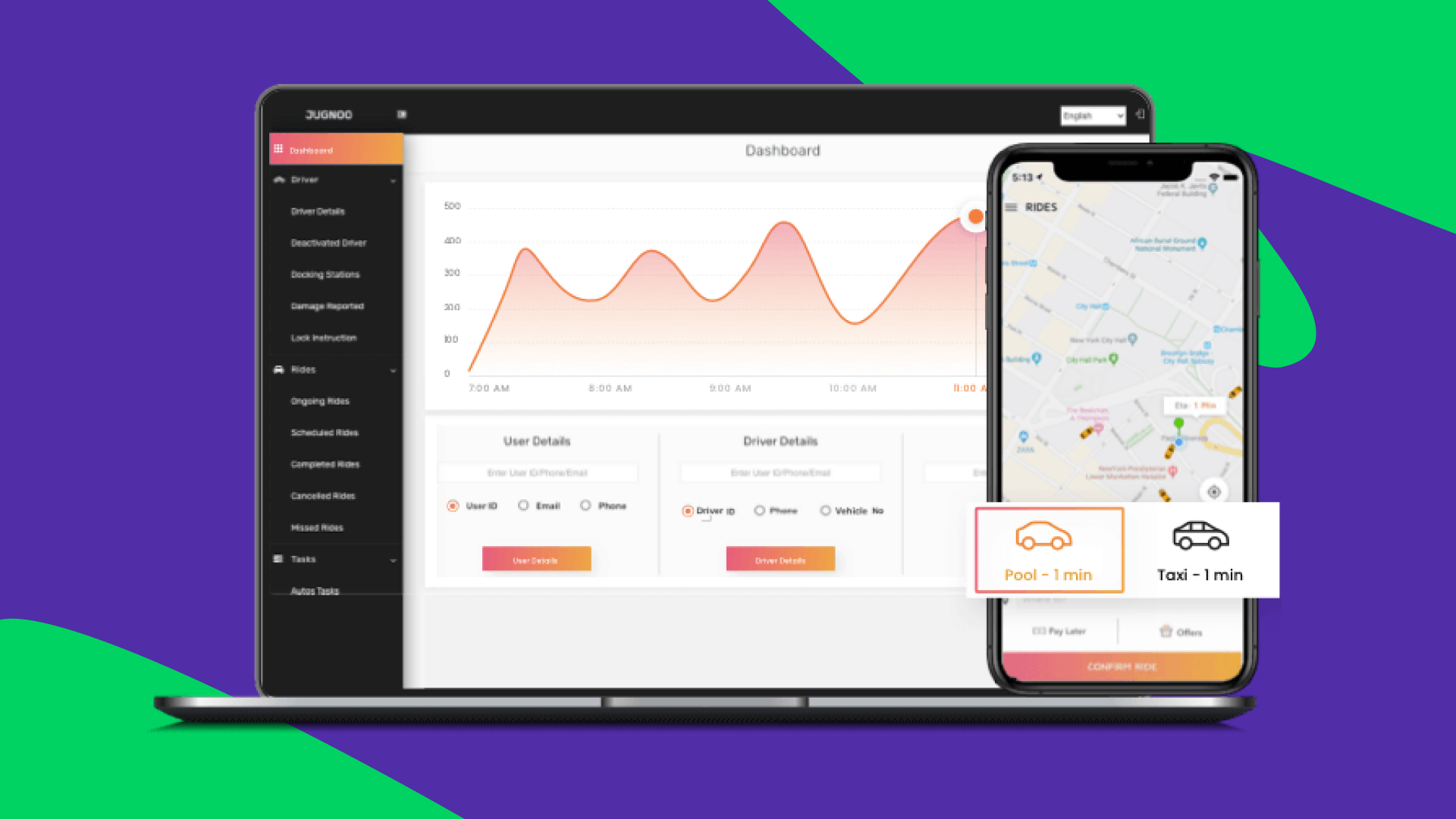
Best for: Businesses launching a taxi service with branded apps or exploring a broader mobility offering that includes additional on-demand services.
Jugnoo provides white-label taxi dispatch software with passenger and driver apps, an administration dashboard, and tools for managing bookings. Its broader product offering also covers other service categories.
Key features
Jugnoo's published taxi software features include:
- Passenger and driver apps for iOS and Android
- A dispatcher panel and administration dashboard
- Real-time vehicle tracking and notifications
- Scheduled rides and fare estimation
- Promotions, referrals, and customer and driver wallets
- Ratings, emergency assistance, and ride-sharing features
- Additional integrations and features available at extra cost
Pricing model: Different plans depending on the rides included and additional per-ride charges beyond the included allowance. Annual maintenance charges starting from the second year, according to the published plan terms. Country-specific pricing and custom arrangements for larger volumes.
Questions to ask before buying taxi dispatch software in Saudi Arabia
Before signing a contract, ask every shortlisted provider the same questions:
- Can you demonstrate a complete Arabic passenger journey? Check booking, fare display, notifications, and right-to-left layouts.
- Which local payment methods can you integrate? Confirm required providers and integration costs.
- Which Saudi regulatory integrations are available? Ask for a clear list of supported integrations and any additional implementation work.
- What is included in the quoted price? Separate setup, licensing, hosting, maintenance, support, branding, and optional modules.
- How does the price change as the business grows? Request estimates for several ride-volume and fleet-size scenarios.
- How do you handle driver and passenger safety? Review live tracking, emergency features, identity and vehicle information, and incident workflows.
- Who maintains and updates the software? Clarify the release schedule, support coverage, and charges for future changes.
- Can you provide a realistic launch plan? Include integrations, testing, licensing dependencies, app-store approval, and driver onboarding.
- Can we speak with a customer operating in a comparable market? Ask about the provider's experience with similar fleet sizes, service types, and local requirements.
Like the article? Share it with your friends!
Related posts
-
 Starting a company like Uber is easier than you think. Find out what are the benefits of starting your own ride-hailing service, where to begin, and which tools will help you.
3 steps to starting your own ride-hailing company (w/ risk-free tools)
-
 Entering a ride-hailing market that already has established players isn't easy. However, we are confident that you can still get your share of the market - if you do your research and learn from it. In this article, we go through plenty of the things you can do to make sure you understand and outperform your competitors.
3 steps to outperforming established competitors in 2024
-
 Here go the best 10 strategies for your taxi company to grow and attract new loyal customers. Give them a try, no matter if you just launched your taxi mobile app or already provide ride-hailing services for some time. You will be pleasantly surprised by how easy it is to attract customer attention! 😎
How to attract customers: 10 strategies