About the company
LifeOne Assist isn’t a typical roadside assistance company. With roots in El Salvador, it evolved into a digital-first platform built around a simple idea: what if getting help in an emergency was as easy as ordering a ride?
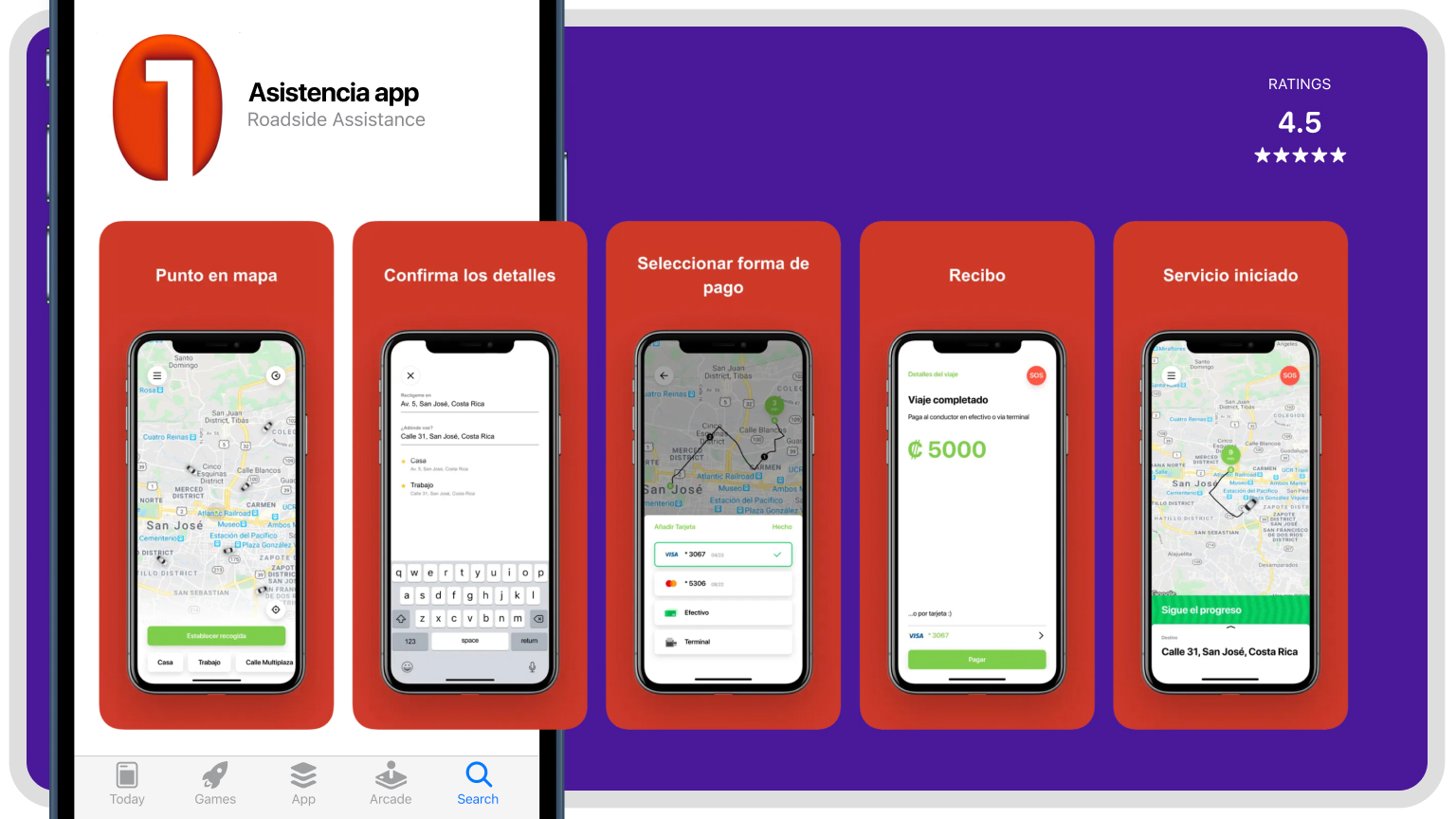
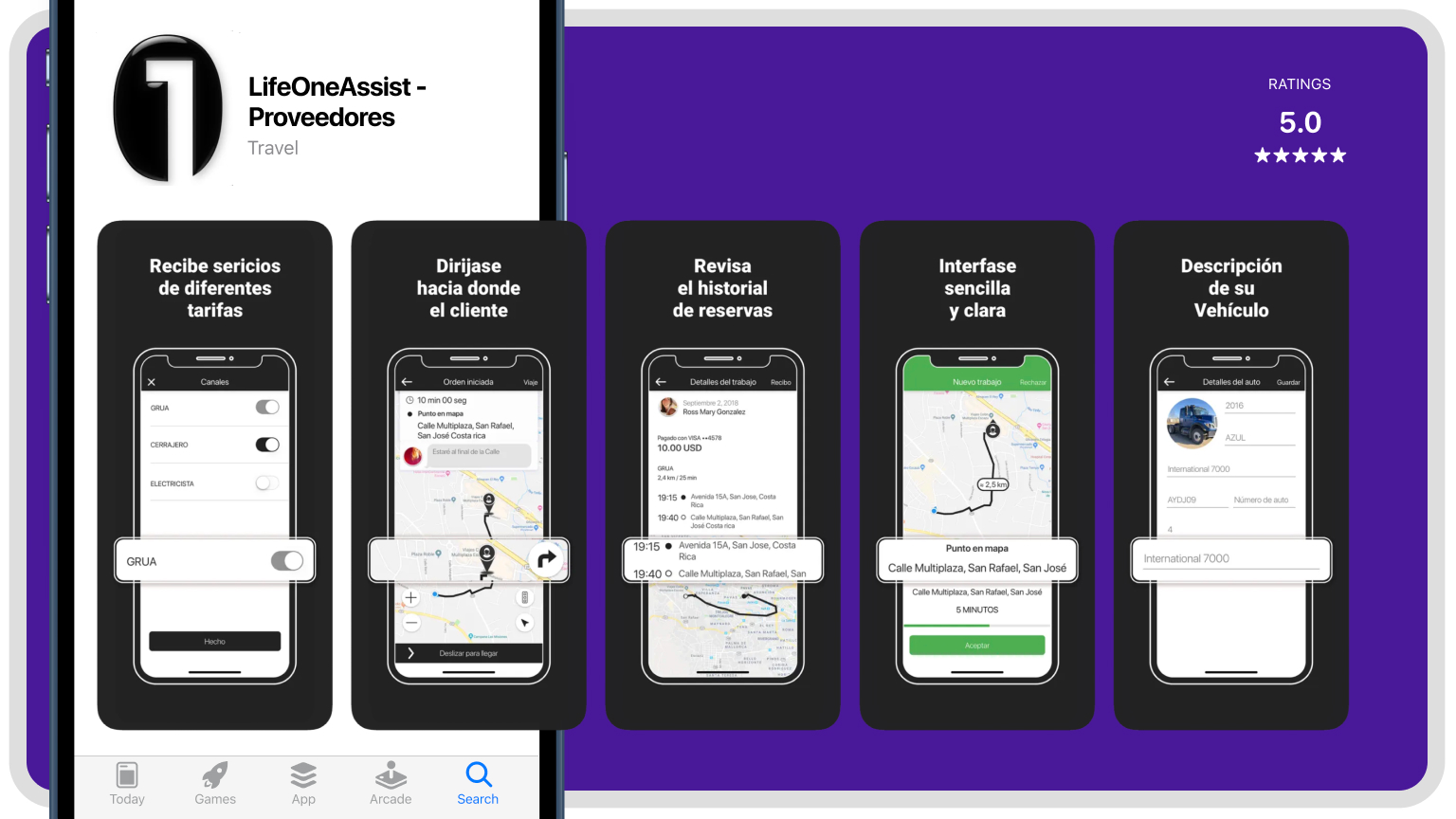
Today, LifeOne Assist connects people in need (whether they’re stuck on the road, locked out, or dealing with a leaky faucet) with a network of service providers who can respond quickly and efficiently. Through its apps, users can request help and track it in real time, while providers manage jobs and payments in one place.
Total orders of LifeOne's on-demand services, 2022-2025

Roadside assistance on demand
Most app-based on-demand platforms tend to stay focused on a single niche, be it mobility or food delivery. LifeOne Assist takes a broader approach, and that’s what makes its model stand out.
Before LifeOne Assist was launched, the emergency roadside assistance services in their locality had several issues:
- There was often no way to request assistance online.
- Customers frequently received incorrect or inconsistent information from call centers.
- Roadside help was slow to arrive.
- It was difficult to predict when assistance would show up.
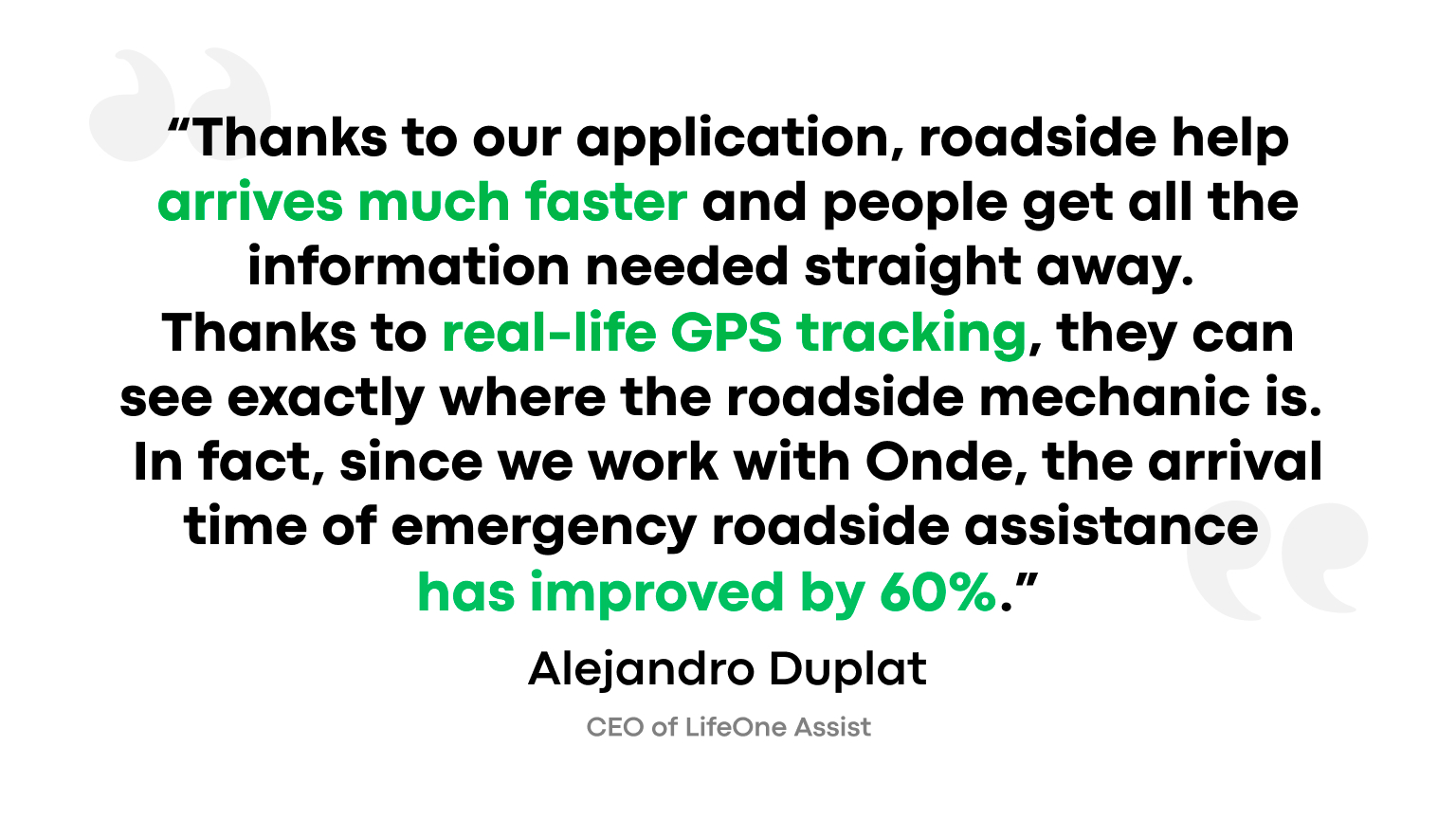
It was in this context that Alejandro Duplat, CEO of LifeOne Assist, saw an opportunity to rethink the entire experience. His idea was to connect roadside service providers with customers in real time and coordinate that relationship in a more structured way. At the center of this vision was a customer app where requesting help could be done quickly and easily in just a few taps.
Building operations with the right technology partner
More than just an app
From the start, LifeOne Assist knew that launching an on-demand service was about making the entire operation work smoothly behind the scenes. They needed a solution that could connect customers, service providers, and insurance partners in one flow, while keeping everything fast, clear, and reliable.
During the selection process, they prioritized:
- flexibility to match their processes
- clear, real-time visibility of every service
- strong traceability from request to completion
- the ability to scale as demand grows
- easy integration with other systems
- reliability and proven experience in the industry
They also took the time to test the product, making sure it could support both current needs and future growth.
Why Onde, and what it changed in practice
Onde's white-label setup helped LifeOne Assist launch a branded experience quickly, while its flexible structure supported different service types and markets. Just as importantly, it gave the team a way to connect dispatching directly to their existing systems.
With Onde in place, LifeOne Assist improved how they run operations day to day. The team obtained the tools to:
- dispatch providers directly from their CRM using API integration
- manage incoming requests and assign them faster
- let providers view and accept available jobs more easily
- track each case through automatic status updates
- monitor services in real time from start to finish
This shift gave them much better visibility and control over the entire service flow.
Growing stronger through partnerships
Starting with the right foundation
Instead of owning fleets or hiring technicians directly, LifeOne Assist built its model around partnerships.
One of the first key partners was INISER, an insurance company from Nicaragua that saw early potential in the on-demand model. Through this partnership, INISER clients could access roadside assistance and related services directly from the LifeOne Assist app as part of their insurance coverage. This early collaboration helped validate the concept and proved that digital, on-demand assistance could work at scale.
How LifeOne selects service partners
As the network grew, LifeOne Assist put clear criteria in place to ensure consistent service quality. Every provider in the network is carefully evaluated before joining.
They look for:
- proven experience (typically at least three years in the market)
- strong customer feedback and reputation
- large enough team to handle demand reliably
- a professional, responsive approach to service delivery
These standards are strict by design. Since LifeOne Assist sits between the customer and the provider, the quality of each partner directly shapes the user experience.
Expanding the network with control
Over time, LifeOne Assist grew both its partner network and the number of services. Roadside assistance remains at the core (including towing, mechanical help, fuel delivery, and tire changes), but the company now also offers home assistance and deliveries.
At the same time, the company has been expanding into new markets. It now operates across several countries in Central America, as well as in the United States, with further activity planned along the U.S.–Mexico border.
Key success factors
LifeOne Assist’s growth relies less on traditional marketing and more on how the model is structured and executed. Marketing is largely handled by partners themselves, while LifeOne focuses on building demand through the platform and expanding its provider network.
Key factors behind its success include:
- strong, carefully selected partner network
- real-time operational coordination across stakeholders
- reliable technology
- flexible model that adapts to different countries and business contexts
- tightly integrated team
- shift from reactive to structured, traceable operations
Together, these elements allow LifeOne Assist to scale consistently while maintaining service quality, trust, and control across its network.