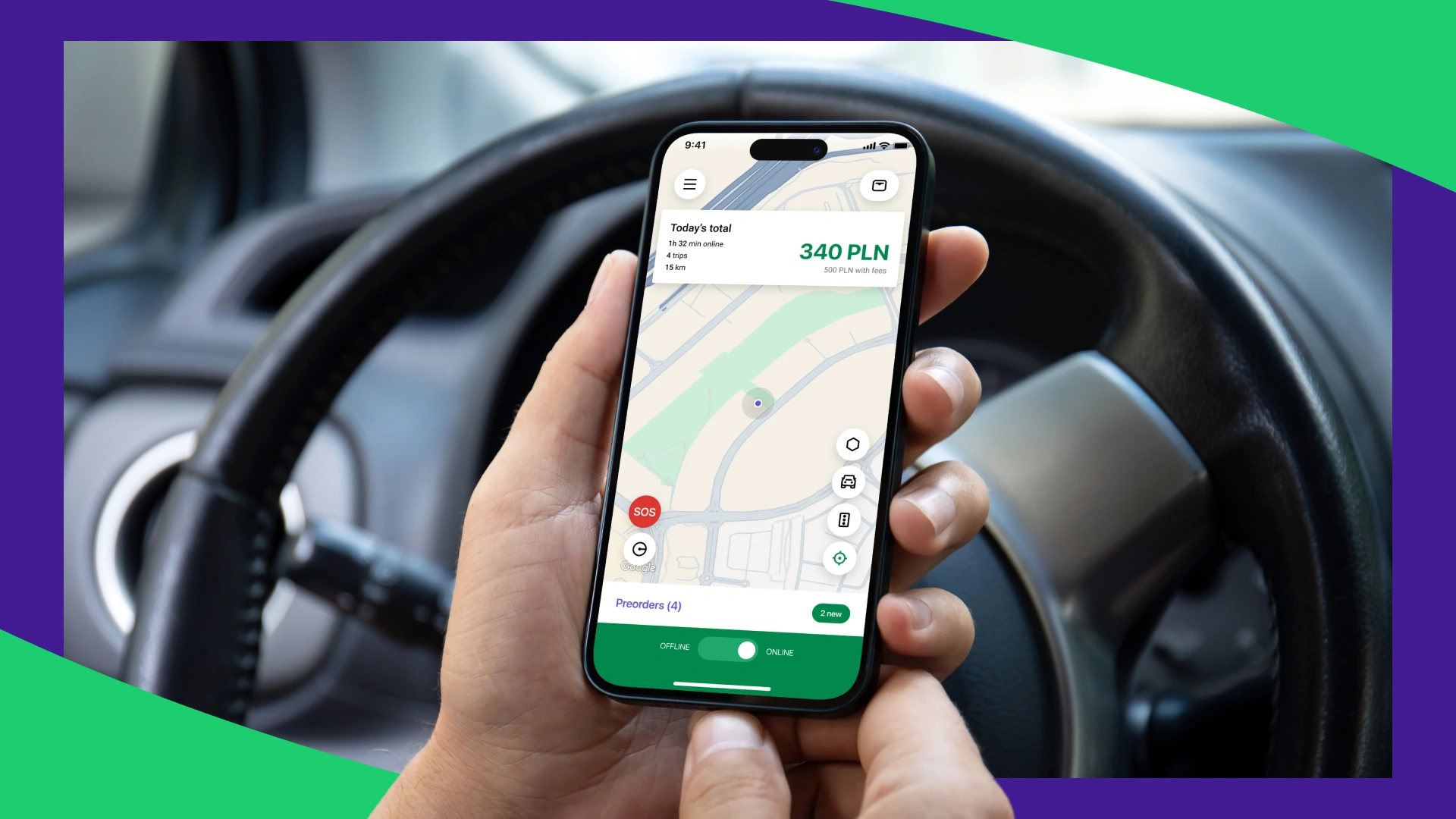
Ride-hailing apps are hardly a novelty in 2026. Consumers have already come to expect such comforts as mobile booking and cashless payments by default. In most markets, having a taxi app is now the minimum requirement to stay competitive. This leaves business owners with the question: how to get a reliable app without overspending?
We created the following review specifically for taxi business owners and non-technical founders who want clear, realistic answers. To begin with, we’ll break down what an “Uber-like” app actually includes and how much it truly costs to build one from scratch. Then, we'll talk about why many companies are choosing white-label platforms instead.
Most importantly, we’ll look at cost as a business decision with long-term consequences.
What does “an app like Uber” actually mean in 2026?
So, what do people mean when they say they want to “build an app like Uber”? As it turns out, this description does no longer fit a single mobile application. Rather, it refers to creating a full ride-hailing ecosystem where several interconnected products work in real time.
Plenty of business owners with roots in traditional taxi transportation underestimate this complexity. The initial misunderstanding then becomes one of the main causes of development costs that spiral out of control.
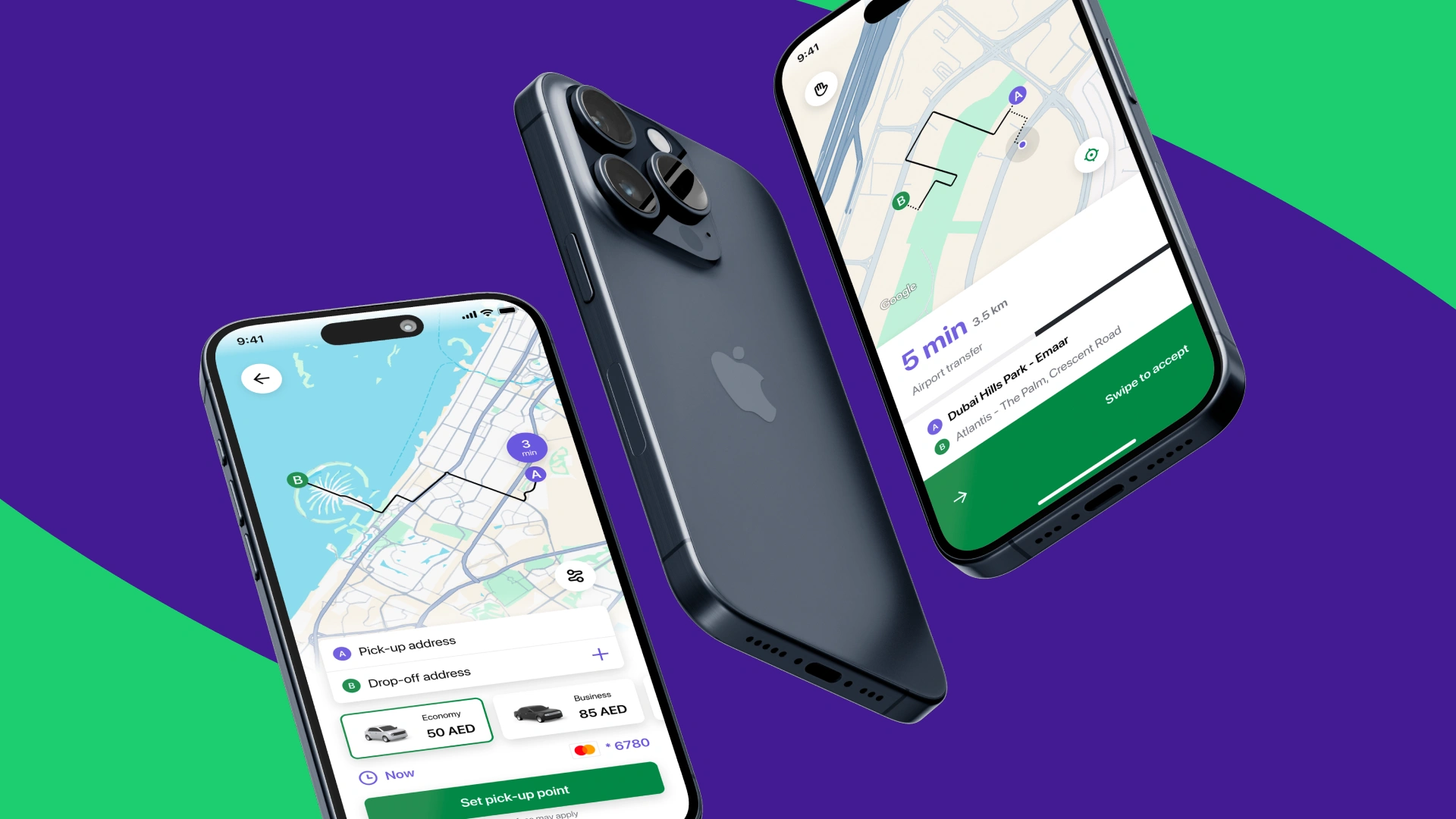
Let's have a brief look at the building blocks.
Passenger app
The passenger app is what riders see, but it’s only one piece of the system. In 2026, users routinely expect way more than basic booking:
- Ride booking with location detection
- Real-time vehicle tracking on a map
- Multiple payment methods
- Upfront price visibility
- Detailed trip history
- Ratings, reviews, and customer support access
- Push notifications for driver arrival and trip updates
From a development perspective, this app must be fast, intuitive, and extremely stable. Any lag or failure directly impacts customer trust and retention.
Driver app
For taxi operators, the driver app is just as critical as the passenger interface. It must support drivers throughout their entire workday with features like built-in navigation, earnings tracking, communication with passengers, etc. In 2026, driver apps also need to handle performance optimization, battery efficiency, and seamless updates, since drivers rely on them continuously.
Admin and dispatch systems
The most complex part of an Uber-like platform is the admin and dispatch backend. This is where taxi businesses actually run their operations via:
- Driver onboarding and verification
- Fleet and vehicle management
- Pricing rules and commission structures
- Trip monitoring and dispute handling
- Analytics, reports, and fraud prevention
- Local regulation and compliance controls
This backend is also where integrations with maps, payments, messaging, and third-party services live.
Each of these features adds time, expertise, and expense. By the time all three systems are considered together, it becomes clear why building an Uber-like app is far more costly than many taxi owners initially expect.
The cost of building an Uber-like app
Now that you know the full scope of an Uber-like platform, we can address the next question: how much does it cost to build all of this from scratch? The short answer is that it’s expensive; more expensive than most taxi business owners expect.
Unlike simple mobile apps, ride-hailing platforms need real-time systems, complex backend logic, and ongoing infrastructure updates. No wonder that development costs for such platforms are often measured in hundreds of thousands of dollars.

MVP vs. fully-fledged platform
Some development agencies promote the idea of building a “minimum viable product” (MVP) to reduce costs. In practice, even an MVP for a ride-hailing app must include booking, tracking, payments, driver management, and dispatch logic. Without these, the app simply can’t operate.
By latest estimates, a basic MVP for an Uber-like app typically starts at $150,000. An MVP version allows you to launch, but keep in mind that it often lacks the stability needed for real-world operations.
A so-called production-ready platform that can reliably support daily operations and growing demand usually costs $300,000 or more. For multi-city operations, total investment can easily exceed seven figures once we include infrastructure and long-term support.
Where all the money actually goes
While intimidating, these costs are not arbitrary. They reflect the amount of work required to build and connect multiple systems that must operate flawlessly in real time.
Backend development is the largest cost driver here. Think trip matching, pricing logic, real-time location tracking, notifications, payment processing, and integrations with external services… These systems must be built to handle spikes in demand without slowing down or failing.
Mobile development adds another major layer of expense, especially if support for both iOS and Android is essential for your business.
And finally, quality assurance, security reviews, and compliance work are critical when handling payments and personal data.
Development timelines
Time is another major factor to consider. Building an Uber-like app from scratch typically takes six to twelve months. During this period, your capital is tied up and market conditions can change significantly. All the while,your competitors continue operating.
The costs most taxi owners overlook
The development budget is only part of the equation when building an Uber-like app. What often catches taxi business owners off guard is how many costs and operational challenges continue after the app is launched.
Servers, cloud hosting, mapping services, payment gateways, and messaging systems all come with recurring fees that scale as your business grows. These costs are often omitted in initial estimates, but there's no way to avoid them once real users and drivers start using the platform.

Maintenance is another constant. Mobile OSs are updated several times a year, and each update can require changes on your side. Without ongoing maintenance, even a well-built app can degrade rapidly.
None of this means that building from scratch is impossible, but business owners need to be aware of the consequences when making that choice.
In the next section, we’ll look at why many taxi companies are choosing white-label ride-hailing platforms and how this approach affects the cost equation.
White-label ride-hailing platforms: a smarter alternative in 2026
A white-label platform is a ready-made ride-hailing system that includes passenger apps, driver apps, and an admin panel, all of which can be branded and configured for your specific business. This way, instead of paying to design and develop everything from the ground up, you start with a proven foundation that has already been tested in the real world.

Cost
From a cost perspective, the difference is substantial. While custom development requires a large upfront investment and months of work, white-label solutions usually involve a relatively small setup fee followed by a predictable subscription. This makes budgeting far easier for companies that need cost certainty.
Updates
What also sets white-label platforms apart is how much responsibility they remove from the taxi operator. In most cases, the provider takes care of:
- Hosting and cloud infrastructure
- App updates for new iOS and Android versions
- Security patches and system stability
- Performance optimization as usage grows
- Technical support and ongoing maintenance
This means the app continues to evolve and remain reliable without requiring constant technical decisions from the business owner.
Time
Speed is another decisive factor. With a white-label solution, launch timelines are typically measured in weeks, not months. Taxi companies can onboard drivers faster, start accepting bookings sooner, and react quickly to local market opportunities without waiting for a lengthy development cycle to finish.
Additional services
In 2026, many white-label platforms go even further by offering additional services beyond software alone. Regulatory updates, onboarding assistance, operational guidance, and sometimes even marketing support are included as part of the package. This turns the platform into a long-term partner rather than a one-off development project.
White-label platforms replace large, unpredictable investments with a transparent model. For most local and regional taxi businesses, this approach delivers the functionality of an Uber-like app while keeping risks under control.
When does building from scratch actually make sense?
While white-label platforms are the practical choice, there are a few scenarios where custom development can be justified:
- You have substantial funding from the get-go. Venture-backed startups may invest in proprietary technology or unique business models.
- You have a technical team of your own. Companies with developers and product managers on staff can reduce dependency on external vendors.
- You require specialized functionality. Unique dispatch algorithms, enterprise integrations, or complex regulatory requirements may require custom solutions.
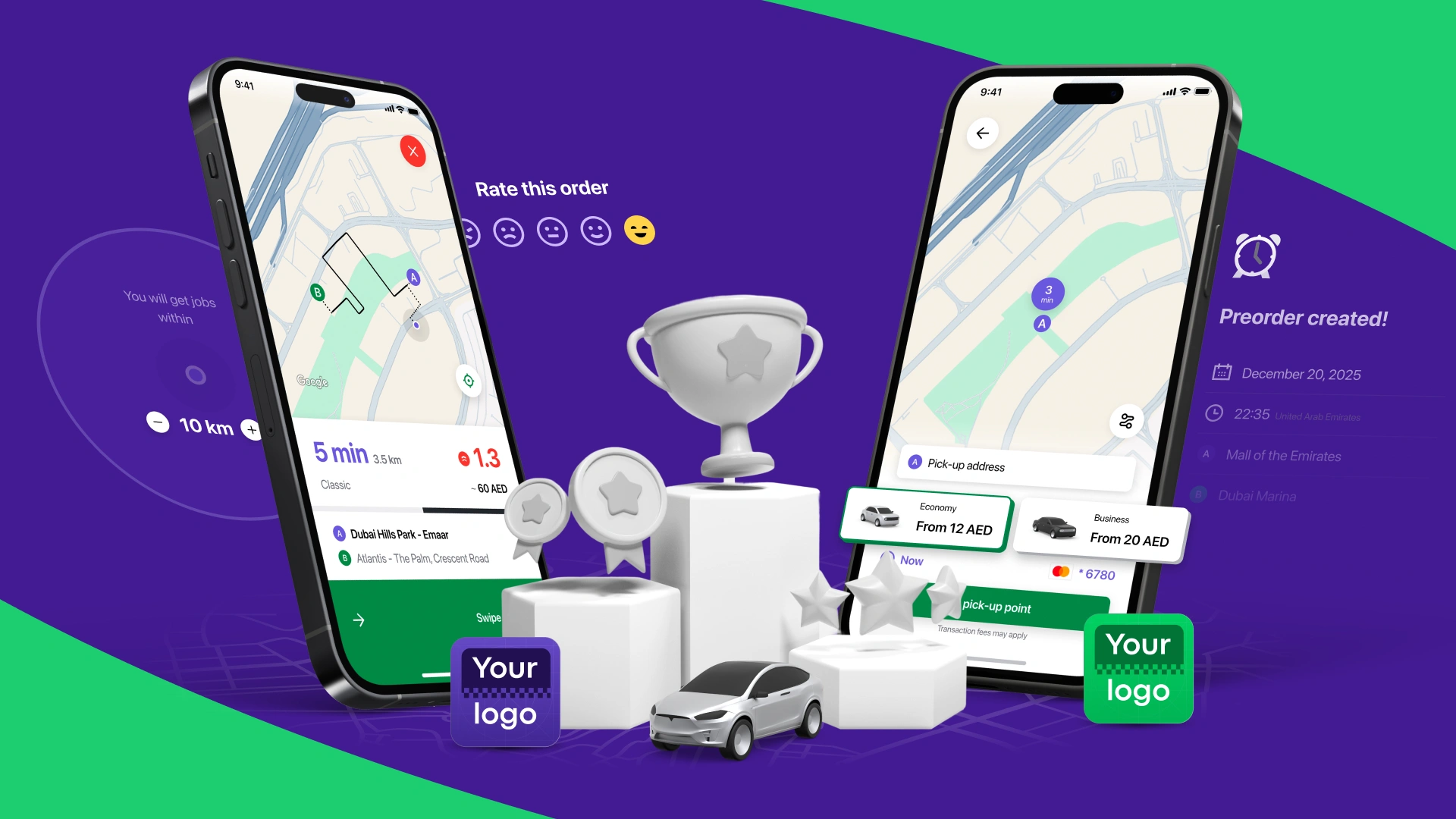
For most local and regional taxi businesses, however, the costs, time, and operational burden of building from scratch outweigh the benefits.
Cost comparison summary
Factor | Custom development | White-label platform like Onde |
Initial cost | $150,000 – $600,000+ | $5,000 – $20,000 setup |
Time to launch | 6–12 months | weeks |
Ongoing maintenance | High, unpredictable | Included / predictable |
Technical expertise | In-house or agency required | Minimal, mostly operational |
Scalability | Requires planning & additional investment | Built-in, cloud-based |
Tech updates | Managed by your team or contractors | Handled by the provider |
People Also Ask
Like the article? Share it with your friends!
Related posts
-
 Discover how Brandy Gray, founder and owner of Loyal Transportation, addressed a lack of safe, legal transport in Ontario’s Niagara Region with a family-run taxi service — and how technology helped her move from 25 drivers on speed dial to a structured, data-driven operation.
Interview with Brandy Gray: How to found a community-first taxi service in Canada
-
 Discover how the President of The Transportation Alliance (TTA) — one of the most influential transportation associations in North America — sees the future of on-demand mobility. In this exclusive conversation, Dan Reid shares how taxi and NEMT companies can stay competitive, why service consistency is the new battlefield, and why modern dispatch technology is becoming the backbone of every successful operator.
Interview with Dan Reid, President of The Transportation Alliance: The New Era of Taxi, NEMT & On-Demand Mobility
-
 From ride value to driver loyalty, every ride-hailing company has plenty of success factors to focus on. Still, increasing ride demand remains at the heart of sustainable growth. The taxi businesses growing fastest in 2026 are those using smart data, digital marketing, and exceptional customer experience to increase taxi trips and attract more passengers.
How You Can Boost Taxi Bookings and Increase Ride Demand in 2026